

Build-to-rent ‘back in play’ as thousands of stalled homes set for revival
 Reading time: 3 minutes
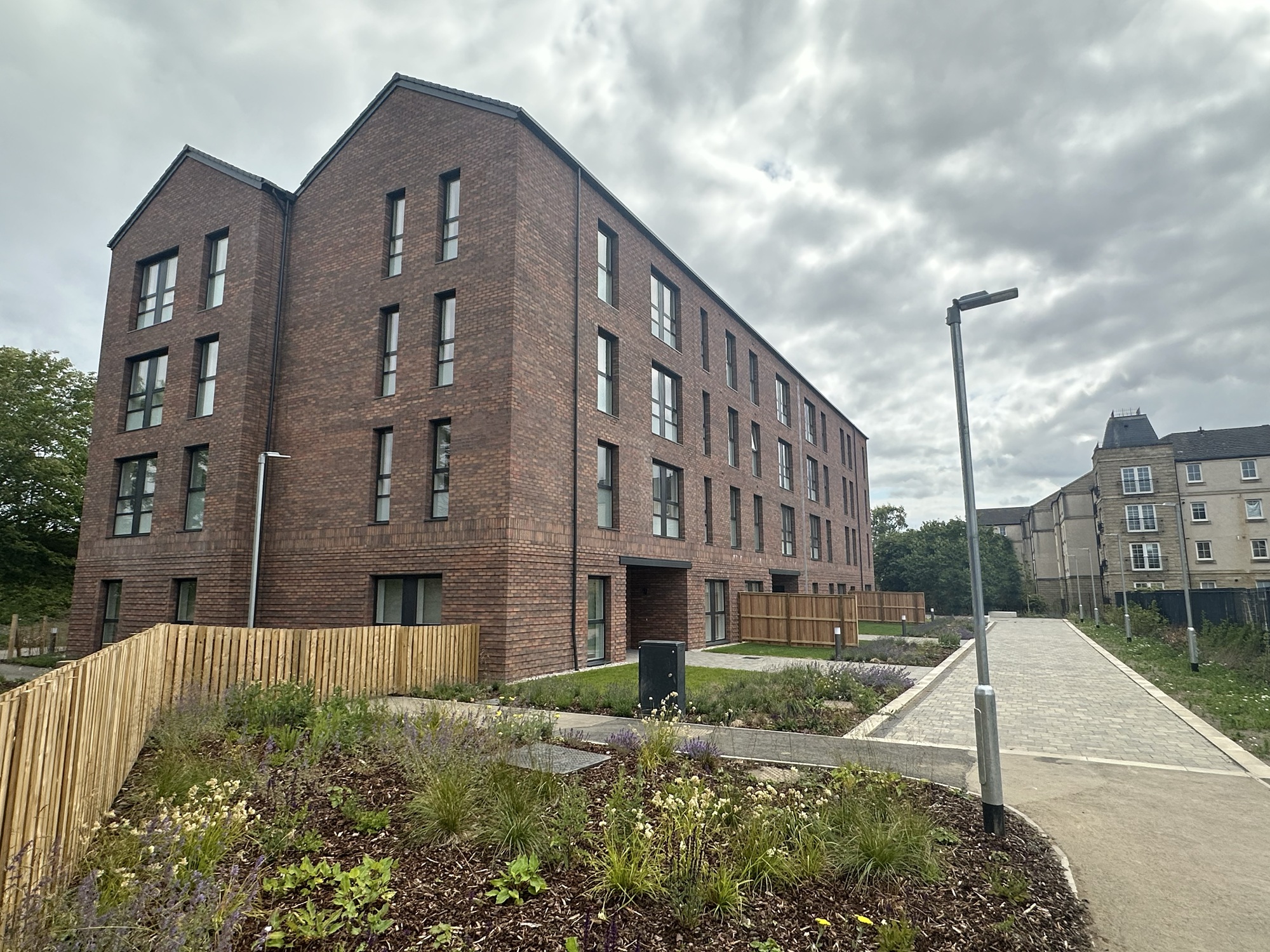
A build to rent sector at Steads Place, Edinburgh. (Photo credit: Drum Property Group)
Scotland’s build-to-rent (BTR) sector is set for a comeback after a period of uncertainty that resulted in stalled development activity, Lambert Smith Hampton (LSH) has found.
New legislation exempting BTR from rent control measures has the potential to unlock nearly 10,000 homes and trigger a wave of renewed investment, according to property consultancy Ryden. The findings form part of LSH’s ‘Live & Kicking’ Build to Rent Report 2026, which highlights how regulatory change in Scotland could unlock new development.
There are currently no large-scale BTR schemes under construction anywhere in Scotland, despite a significant pipeline of approved developments. This highlights the scale of the slowdown that has gripped the market since 2022.
Development activity effectively came to a halt following the introduction of emergency rent controls during the cost-of-living crisis, which led to a sharp drop in investor confidence and delayed new projects across the country.
However, the introduction of new regulations exempting BTR developments from rent controls has provided long-awaited clarity, prompting a significant shift in sentiment across the sector.
The Private Housing Rent Control (Exempt Property) (Scotland) Regulations 2026, which came into force in April, confirm that qualifying BTR schemes will not be subject to rent control measures, removing a key barrier that has held back delivery for more than three years.
As a result, developers and investors are now returning to the market, with activity expected to focus initially on Glasgow and Edinburgh.

David Fraser
Ryden, part of the LSH Group, led the Scotland-focused analysis within the report.
David Fraser, partner in residential investment & development, Ryden, said: “The market effectively ground to a halt after 2022, but we’re now seeing a clear turning point. The introduction of rent control exemptions has restored the certainty investors need to commit to new projects.
“Scotland has moved from one of the most uncertain BTR markets in the UK to one of the most compelling investment opportunities. With a substantial consented pipeline of nearly 10,000 units already in place, the opportunity now is to unlock delivery and help address the country’s housing shortfall.”
More than 5,200 BTR homes have been delivered across Scotland to date, with activity heavily concentrated in Glasgow and Edinburgh. However, this remains well below the level seen in comparable UK cities, where BTR has become a key driver of housing supply and city centre regeneration. The attractiveness of the BTR sector is reinforced by strong tenant demand and occupancy levels in the completed schemes.
Industry experts also point to significant untapped potential, with Scotland’s major cities lagging far behind English counterparts in terms of BTR provision, despite strong population growth and a high proportion of young renters.
There has also been a marked increase in interest in the development of co-living and single-family rental (SFR) products in Scotland, both of which are expected to play a growing role in accelerating delivery, particularly as policymakers seek solutions to Scotland’s housing emergency.
Crucially, recent policy changes mean Scotland now offers a more stable and potentially more attractive regulatory environment for BTR investment than England & Wales, opening the door for domestic and international capital to re-enter the market.
With demand continuing to rise and barriers to investment now easing, Ryden believes Scotland is entering a new phase for build-to-rent growth, with long-delayed developments now expected to move forward.

Share this article:

Subscribe to our newsletter to not miss articles like this one:
 SUBSCRIBE