





Building health into homes must be central part of prevention, report argues
 Reading time: 3 minutes
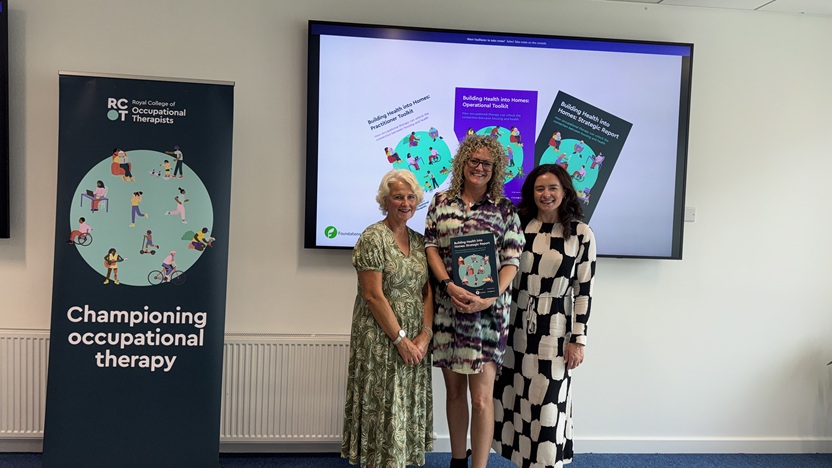
(from left) Specialist housing occupational therapist and Horizon Housing Association chair, Jill Pritchard; Lauren Walker, professional practice manager at Royal College of Occupational Therapists; and Katie MacGregor, policy and public affairs lead, Scotland, Royal College of Occupational Therapists
Housing must be treated as a core part of preventing placing avoidable pressure on health and social care services, not an issue addressed only once people reach crisis point, according to a new report by the Royal College of Occupational Therapists (RCOT).
Building Health into Homes highlights the scale of the challenge across the UK, including that one in five wheelchair user households in Scotland has unmet housing needs. It also points to the wider impact of inaccessible and unsuitable homes, from falls and delayed hospital discharge to deterioration in health and increased demand on stretched services.
RCOT is calling on politicians, policymakers and system leaders to strengthen links between housing, health and care; shift investment towards prevention and early intervention; build more accessible and adaptable homes; and support the workforce to deliver joined-up, place-based solutions.
Lauren Walker, professional practice manager at RCOT, said: “Everyone lives somewhere, but housing is too often treated as an afterthought in health and care, meaning people are reaching the point of crisis before they get support. Building Health into Homes sets out a different approach. It shows how the home can be used as a health intervention, not just something to react to later.”
The resources were launched successfully in Scotland in late August, bringing together stakeholders from across the housing sector for a strategic roundtable discussion. The event created space to explore how health, housing and social care partners can work more closely together, and helped build momentum behind the report’s practical resources and recommendations.
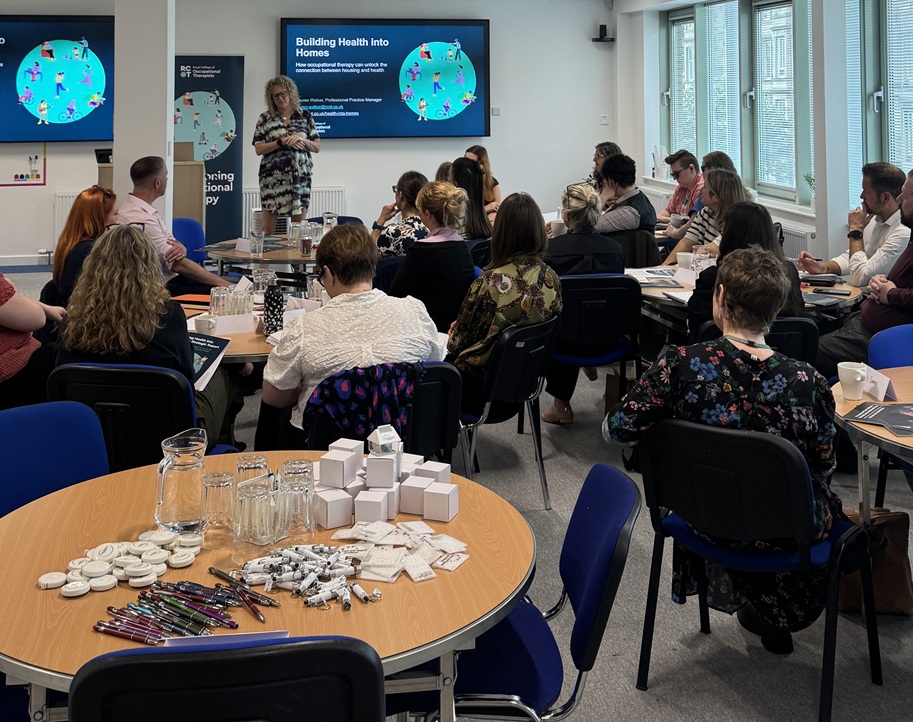
Since June, RCOT has led or contributed to events focused on sharing the resources and supporting implementation, reaching more than 200 influential leaders and decision-makers, including parliamentarians, service leaders and practitioners.
A key message is that the home should be seen as part of the solution to Scotland’s health and care challenges. Occupational therapists already play an important role in connecting services, identifying risks early and supporting people to live safely and well at home, but this expertise is not yet used consistently across systems.
Building Health into Homes is helping to create conversations between sectors that share a common ambition to improve health and wellbeing, but do not always work closely together. RCOT says that acting earlier on housing-related risks can reduce avoidable harm, support independence and ease pressure on health and social care services.
Further engagement is planned, including a webinar with Care and Repair Scotland and a showcase session at the OT Show on 25 November.
Visit the RCOT website to download the resources and use them in your services. Resources are available for strategic leaders, service managers and practitioners. To learn more, please contact Katie MacGregor at katie.macgregor@rcot.co.uk.

Share this article:

Subscribe to our newsletter to not miss articles like this one:
 SUBSCRIBE

