


Craig Stirrat: Why are we still learning Dickens’ lesson that poor housing destroys health?
 Reading time: 5 minutes
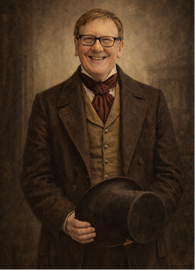
Craig Stirrat
Charles Dickens warned us that poor housing destroys health. Craig Stirrat, CEO at Grampian Housing Association, says Scotland should listen.
On 16 September, Scottish Housing Day will highlight the vital connection between good housing and good physical and mental health.
It is incredulous that this is a conversation we need to have — as it is not a new one.
More than 150 years ago, Charles Dickens understood that where people live have a profound impact on how they live and how long they live.
His famous opening to A Tale of Two Cities feels remarkably relevant today:
“It was the best of times, it was the worst of times…”
Scotland enjoys world-class healthcare and medical advances unimaginable in Victorian Britain. Yet healthy life expectancy is falling, long-term illness is increasing, and the gap between our richest and poorest communities remains stubbornly wide.
Dickens would have recognised the contradiction.
In Bleak House, Dickens places the notorious slum of Tom-all-Alone’s at the heart of his story. Overcrowding, poor sanitation, contaminated water and neglected housing are not simply part of the backdrop—they are the causes of illness and early death. Children die from fever, families are trapped in poverty, and the indifference of society becomes as dangerous as disease itself.
His message was simple: unhealthy environments creates unhealthy people.
Regrettably the tragic death of Awaab Ishak reminds us that this truth has never disappeared.
Today’s Scotland no longer battles cholera or typhus, but many of our biggest health challenges still follow the same social patterns. Heart disease, respiratory illness, poor mental health and long-term disability are all far more common in communities experiencing multiple deprivation.
Despite advances in medicine, men in Scotland can expect only around 59.6 years of good health, while women can expect around 60 years. Around 28% of working-age adults now live with a disability, and almost one in four Scots has a limiting long-term health condition. Disability among children has doubled in just three years, with forecasts suggesting that more than one million people will receive disability payments by 2030.
The reasons are complex, but one fact is undeniable: poor health is heavily concentrated in our poorest communities.
The Scottish Household Survey 2022 found that almost half of all social rented households are located within Scotland’s 20% most deprived neighbourhoods. That should concern all of us.
Affordable housing should never become associated with concentrated disadvantage. Yet over time we have allowed too many communities to become defined by poor health, unemployment and deprivation. If social housing increasingly becomes seen as housing of last resort, we should not be surprised that stigma follows.
The housing sector, and politicians of every persuasion, must accept some responsibility for changing that narrative.
Nowhere is the connection between housing and health clearer than in Aberdeen. NHS Grampian data shows that the poorest health outcomes and lowest healthy life expectancy are concentrated in neighbourhoods such as Torry, Tillydrone, Seaton, Woodside and Northfield.
Men living in the most deprived areas can expect to live around six fewer years than those in the least deprived parts of the city, while conditions such as heart disease, COPD and poor mental health remain disproportionately common.
The same story can be found across Scotland. Even in prosperous Edinburgh, there is a 12-year life expectancy gap between the city’s richest and poorest communities.
Our postcode continues to shape our health far more than it should.
This is why we need to stop thinking of housing simply as a public service and start recognising it as essential health infrastructure.
A warm, dry, affordable home located in great places, improves physical health, supports mental wellbeing and reduces pressure on the NHS. Every pound invested in preventing damp, improving energy efficiency or adapting a home can prevent far greater costs later through ill health, hospital admissions and social care.
Dickens understood that prevention mattered long before the NHS existed.
The housing sector now has an opportunity to build on that lesson by embedding health conversations into routine tenancy visits, training staff to recognise health risks, using repairs data to identify vulnerable households earlier and strengthening partnerships with organisations such as NHS Grampian around shared prevention goals.
But we also need to tell this story better.
Dickens did not change attitudes through statistics alone. He changed them through storytelling. He helped readers see the human consequences of injustice.
We should do the same.
Behind every housing repair is a family. Behind every adaptation is someone living independently for longer. Behind every warm home is a healthier child, a more resilient community and less pressure on our health service.
Housing associations are more than landlords. They are health partners.
More than 150 years after Bleak House, Dickens’ central message still challenges us: societies that neglect housing ultimately neglect health.
If Scotland is serious about reducing health inequalities, improving wellbeing and creating thriving communities and ultimately tackling the failing economy, then we must finally treat good housing not simply as social policy, but as one of the most powerful public health interventions we have.

Share this article:

Subscribe to our newsletter to not miss articles like this one:
 SUBSCRIBE