

East Lothian approves 7% rent increase for council tenants
 Reading time: 5 minutes
Councillors have approved a 7% rent increase for East Lothian Council tenants for 2026/27, and agreed its overall council budget for the same period.
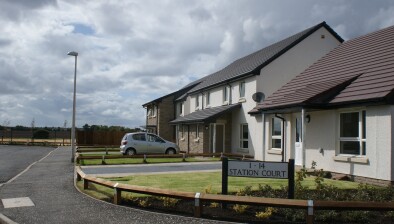
A consultation was carried out with council tenants at the end of last year, and 66% of those who took part agreed with plans to raise rents by 7% to allow the council to continue to deliver its housing service and modernisation and new build programmes.
This means that the average rent for council tenants will rise by £6.12 to £93.58, effective from Monday 6 April 2026.
Councillor Andy Forrest, cabinet spokesperson for housing and property maintenance, said: “Thank you to all the tenants who took part in last year’s rent level consultation. Your views are important to us in understanding your satisfaction levels with our housing service, your thoughts on the amount of rent you pay and to ensure that we are spending your rent on the things that matter most to you.
“The survey showed that our tenants put most value on the repairs service and door and window replacements, followed by modernisation including energy efficiency measures, and investing in new council homes. It was also heartening to see that 65 per cent of those who responded felt that the rent they pay is good value for money.
“East Lothian rents remain some of the lowest in Scotland, despite the pressure on our housing service as our county continues to be one of the fastest growing areas.”
Council also approved a Housing Revenue Account expenditure budget for 2026/27 of £44.430m, an increase of around £3m on last year, which will be spent on service costs including repairs and staffing. The Capital budget of £50,454m will be invested in new council housing, modernisation, extensions and energy efficiency improvements to existing council properties.
Council budget agreed
East Lothian Council’s budget for 2026/27 has also been agreed, with a focus on creating opportunities for young people, supporting vulnerable residents and continuing to invest in local infrastructure.
The administration/cross party budget has been developed in the face of an increasingly difficult financial climate for local government. The council is experiencing significant cost pressures including increasing service demand, with East Lothian having one of Scotland’s fastest growing population rates.
Despite these challenges, the agreed budget enables the council to continue investing in significant priority areas such as adult social care, children’s services and education.
A 7.5 per cent council tax increase for 2026/27 was agreed. For people living in a Band D property, this represents a £2.28 weekly increase.
Councillors also agreed:
- New revenue and capital investment to increase capacity for holiday clubs for children with disabilities, youth work and roads winter maintenance
- A commitment to invest over £233m in infrastructure over the next five years including education estate
- An increase of £3.3m to the Integrated Joint Board (IJB), which is responsible for the planning and delivery of adult health and social care services
- An additional £900,000 for council home modernisation
- An increase in roads capital budget of £1m, including enhancements to winter maintenance
- Planned savings of £13.2m over the next five years with a commitment to identify further measures to close the budget gap over the medium term.
The council will also continue investing in local infrastructure and schools through its capital programme, whilst helping to support and protect the local environment.
Council leader Norman Hampshire said: “This is a budget in which our top priority is to maintain the highest possible standard of essential public services for East Lothian communities, ensuring we give children the best possible start in life and provide care and support for everyone needing our help.
“Setting a balanced budget is increasingly difficult. The cost of providing our valued services continues to rise due to factors such as inflation, increasing service demand and population growth – because the council has been playing its part in delivering nationally set housing targets.
“Council tax only provides around 25% of the budget we need to run services, and income from new housing does not cover the complete cost of services needed for a larger population.
“Most of our funding comes from central government and while the amount has risen, around half of it is tied to existing or new policy commitments. It means we are still left with a budget gap to fill of around £13.3 million, due to the rising cost of services.
“Although it is a very difficult decision to take, increasing council tax by 7.5% helps us to balance the budget alongside other cost reduction measures, enabling us to protect services for the benefit of local residents as far as possible.
“I am pleased that, despite the significant and growing challenges we face, this is also a budget which will see the council take positive and proactive action to support communities - for example by investing in specialist youth workers to create opportunities for young people and the creation of additional holiday support for children with disabilities who are unable to access mainstream resources due to their complex needs. We also continue to recognise the importance of investing in vital areas such as social care, housing and the vital local infrastructure in which we all depend, including the local road network.”

Share this article:

Subscribe to our newsletter to not miss articles like this one:
 SUBSCRIBE