





Hillhead Baptist Church to be demolished despite objections
 Reading time: 5 minutes
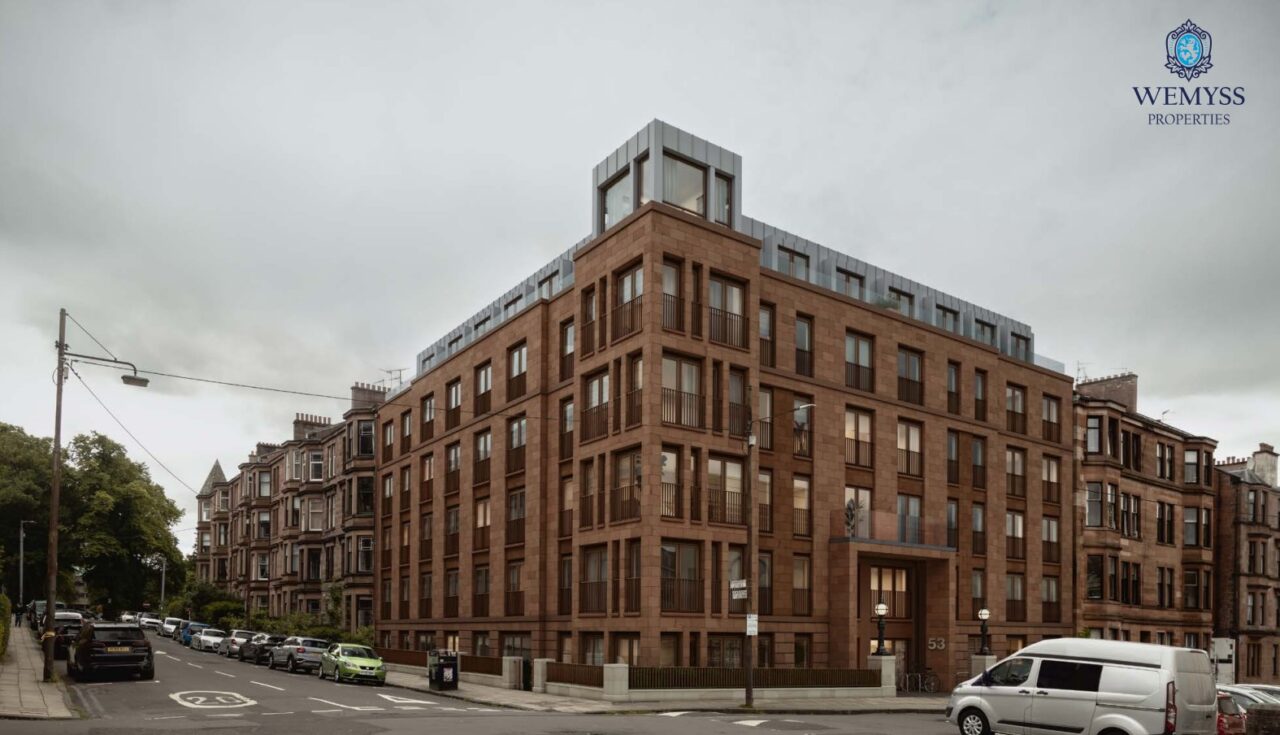
Glasgow City Council has granted permission for the demolition of the B-listed Hillhead Baptist Church, clearing the way for a 32-flat residential development on the site, despite more than 300 objections from the public.
Developer Wemyss Properties had argued that demolishing the Cranworth Street building was the “only economically viable option,” with the firm’s planning agent, Tim Ferguson of Ferguson Planning, telling the planning committee that every investigation had concluded the building was “not viable for redevelopment” and that retaining the façade was not economically achievable.
The committee was split three to three, with the deciding vote falling to chair Cllr Ken Andrew. Andrew said he had “some concerns” about the design of the proposed six-storey block but believed the building would likely continue to deteriorate, and might ultimately need to be demolished regardless to protect neighbouring tenements. He added that the committee faced “a binary decision” between rejecting or granting the application, with no scope to push for a revised design.
Council planning officials had recommended approval. The application drew 19 letters of support against 332 objections.
Cllr Imran Alam proposed an amendment to reject the plans and remarket the site for at least six months, in the hope a developer willing to retain the façade might come forward.
Glasgow MSP Paul Sweeney backed this approach, telling the committee he was unconvinced that “at least partial façade retention can’t be achieved” and pointing to other historic Glasgow buildings where retention had been completed.
He criticised what he called an “intransigent” attitude from the developers in failing to justify the case for demolition, and argued the 150-year-old building, designed by Thomas Lennox Watson in the Greek revival style, deserved to be treated as a heritage asset.
Cllr Saqib Ahmed, who seconded the amendment, said he supported new housing for the city but not “at the expense of such a beautiful building,” while Cllr Thomas Rannachan also voted against demolition.
The amendment was rejected. Councillors Mhairi Hunter and Paul Leinster joined Andrew in supporting the application. Hunter said the developers had been clear that refusal would not lead to a fresh application, and that with the building’s roof already gone, further delay would only see it deteriorate faster.
“We can’t posit a third option where someone might come along who is willing to bear the cost of retaining the façade,” she said.
Dr John Boyle, director of research at property firm Rettie & Co, told the committee that viability was “the biggest issue in development today,” noting that construction costs had risen by more than 40% since 2019 against a 26% rise in average house values. He said a range of façade-retention options, including alternative uses such as student accommodation or a hotel, had been tested and all were found to generate significant financial losses.
Some objectors also took issue with the proposed replacement building itself. Hillhead Community Council called the design “not suitable” for a site close to two A-listed buildings, the Western Baths and the Art Deco building on Vinicombe Street, arguing that any replacement for a listed building should be of a quality to enhance the area or stand a realistic chance of listing itself, which it said this proposal did not.
A long-running saga
The church’s main hall has stood empty since 2004, when the congregation moved into an adjoining single-storey hall known as the Tryst, vacating the site entirely by 2017.
As far back as 2000, a Historic Environment Scotland report flagged the building’s poor condition, citing unfavourable ground conditions, design shortcomings and a lack of investment, prompting a search for a development partner that ran from 2004 to 2016 without success; two prospective partnerships fell through on financial viability grounds.
Wemyss Properties came on board as the development partner in 2017, and in 2021 it secured planning permission for a scheme retaining part of the façade alongside 29 flats and community facilities. The pandemic delayed progress, and that same year the developers told the council the roof needed emergency removal, with demolition work on it beginning in January 2022. Wemyss Properties completed its purchase of the property in April 2022.
Subsequent condition surveys in March 2022 and June 2023 found the façade deteriorating faster than expected, with future repairs likely to be extensive and increasingly costly amid rising construction costs.
An independent development consultant reviewing alternative uses for the site concluded none would allow façade retention without significant financial loss, leading the developers to conclude demolition was the only economically viable path forward.
The current applications, covering both planning permission and listed building consent, were submitted in August 2024 and revised several times in response to feedback from the council and stakeholders.
Changes included refining the proportions of the building’s corner bay, adjusting upper-floor window arrangements, redesigning the main entrance, switching to red sandstone for street-facing elevations and grey zinc roofing to better complement neighbouring slate roofs, and reworking internal flat layouts.
New landscape plans for the courtyard and street frontage propose preserving architectural features such as columns and original windows for display in the garden, while supporting documents including a daylight and sunlight assessment, an embodied carbon and circular economy statement, and an updated stone condition report from Simpson and Brown were also revised.
The site sits within the Hillhead Conservation Area, and the developers say the design changes were intended to create a more harmonious relationship between the new building and its surrounding architectural fabric.

Share this article:

Subscribe to our newsletter to not miss articles like this one:
 SUBSCRIBE

