
Housing secretary welcomes Awaab’s Law coming into force today
 Reading time: 7 minutes

Housing secretary Shirley-Anne Somerville
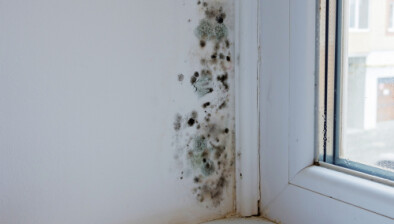
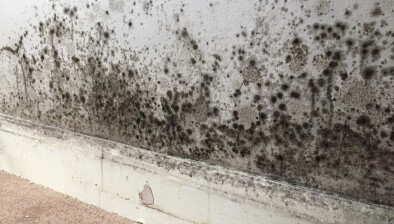
New laws strengthening tenants’ rights against damp and mould come into force today.
Known as Awaab’s Law, the Investigation and Commencement of Repair (Scotland) Regulations 2026 will require landlords to investigate reports of damp and mould within strict timescales, provide written findings and carry out necessary repairs.
The legislation has been named in memory of two-year-old Awaab Ishak, who died from a severe respiratory condition caused by prolonged exposure to mould in his home in England.
Welcoming the legislation coming into force, housing secretary Shirley-Anne Somerville said: “No child should ever suffer the way Awaab Ishak did, and no family in Scotland should have to live with damp or mould that’s ignored or brushed aside. That’s why, as of today, landlords have a legal duty to act within days.
“We know the overwhelming majority of rented homes in Scotland are decent, warm and dry. But for the small number where that isn’t the case, this law closes the gap. Tenants no longer need to fight to be believed, and landlords now have a clear, consistent standard to work to.
“This has been built together with the people it affects most: tenants who’ve lived through these problems, and landlords who want to get this right. I thank them for all their efforts in effecting this change. My message today is simple: know your rights, know your responsibilities, and let’s make sure homes across Scotland are places people can be healthy in.”
Under the new rules, landlords must ensure that a competent person investigates reports of damp and mould within 10 working days. A written summary of the investigation must then be provided to the tenant within three working days of the investigation ending.
Where substantial damp or mould is identified, remedial work must begin within five working days and be completed as soon as reasonably practicable.
Hazel MacIver, Policy and Campaigns Officer at Propertymark, said letting agents managing properties on behalf of landlords will have an important role in ensuring reports are dealt with promptly, with appropriate records, communication and access to competent contractors in place.
“The new duties on damp and mould represent an important change for letting agents and landlords in Scotland,” Hazel added. “The timescales are clear, and agents will need to have robust processes in place from the point they become aware of a potential issue.
“Good record-keeping, clear communication with tenants and access to competent contractors will all be important in ensuring investigations and any necessary remedial work can happen within the required timescales.
“Propertymark has produced guidance and practical resources to support members with implementation, and we encourage agents to make use of these as the new duties come into force.”
Dr Olivia Swann, Scottish Fuel Poverty Advisory panel member and honorary consultant in paediatric infectious disease and senior clinical fellow, University of Edinburgh, said: “Our hospitals see first hand the impact of damp homes on families when children are admitted with wheeze, chest infections or asthma.
“The Scottish Fuel Poverty Advisory Panel welcomes the introduction of Awaab’s Law which gives everyone renting a home in Scotland a clear right to have damp and mould investigated and repairs started within set timescales. This is good news for health as the condition of our homes shapes how well we breathe, how well we sleep and how we recover when we’re unwell.
“While providing repairs in a timely manner is a welcome first step, addressing damp and mould must go hand in hand with wider measures to beat fuel poverty, ensuring that homes are warm, dry, energy efficient and affordable to heat. The Scottish Fuel Poverty Advisory Panel will continue to scrutinise progress on tackling fuel poverty and calls for a coordinated approach across housing, health and energy policy, working constructively with partners to support healthier homes and reduce health inequalities.”
Eddie Hooker, CEO of mydeposits Scotland, added: “This is a really important change which should help raise standards, remove ambiguity and, most importantly, ensure tenants are better protected and homes are kept safe. Damp and mould can have serious consequences, so having clear expectations around how quickly problems must be investigated and acted upon is a positive step.
“For landlords, the biggest practical change is that the clock will now be ticking. They need to be confident they have the systems and contractors in place to respond within the new timescales. The cause of damp and mould is not always immediately obvious, but questions around responsibility should not delay the initial response. Early reporting, good communication and clear records from the outset will be more important than ever.”
Aidan Dunn, trainee solicitor at Holmes Mackillop, notes that the incoming regulations in Scotland will impose obligations on both social and private landlords.
“The regulations will place importance on both tenants and landlords to work collaboratively,” he said.
“Tenants should raise concerns with their landlords as soon as possible, and landlords are obligated under clause 6.1 of the regulations to ‘commence any repair work within five days after the day in which the investigation is concluded’.
“For social landlords, the repairs must make the property ‘substantially free from damp and mould within 20 working days from the date the repair work is commenced’ and for private landlords, the repair work must be completed within ‘a reasonable time after the date of the investigation’.”
Dunn notes that the guidance is not exhaustive, with the regulations acknowledging every case of damp and mould as different.
“Landlords will be required to apply their own judgement on individual cases and should seek specialist support if necessary to ensure that they are in compliance with the regulations,” he said.
The reforms introduced today will also cut the tenancy succession period from 12 months to six, while wrongful termination payments are to increase significantly.
The rules will reduce the qualifying period for a person to have lived in a residential property before being eligible to inherit a private residential tenancy following the tenant’s death.
The qualifying period will reduce from 12 months to six months for relevant tenancies where the tenant dies on or after 6 October 2026.
Hazel said: “The succession right changes are aimed at supporting grieving families and people with long-term carers. Although tenancy successions are relatively rare, letting agents and landlords must understand the increased flexibility being introduced by the Scottish Government should such a situation arise in a tenancy they manage.”
Tenants can apply to the First-tier Tribunal for a Wrongful Termination Order if they believe their landlord misled them into leaving a Private Residential Tenancy by relying on an eviction ground that did not apply.
For tenants who leave a property on or after 6 October 2026, the potential award will increase significantly, from the current range of up to six months’ rent to between three and 36 times the relevant sum, subject to the statutory calculation.
Hazel said: “Tenants can apply to the First-tier Tribunal for a ‘Wrongful Termination Order’ if they believe their landlord misled them into leaving a Private Residential Tenancy agreement by relying on an eviction ground that did not apply.
“As the potential awards increase significantly, landlords and agents must ensure possession procedures are followed carefully, with eviction grounds genuine and properly evidenced.
“For landlords and agents, robust processes and compliance will be essential. Propertymark continues to engage with the Scottish Government to support clear and workable implementation of these reforms.”

Share this article:

Subscribe to our newsletter to not miss articles like this one:
 SUBSCRIBE