





Landmark Aberdeen building set for residential conversion
 Reading time: 2 minutes
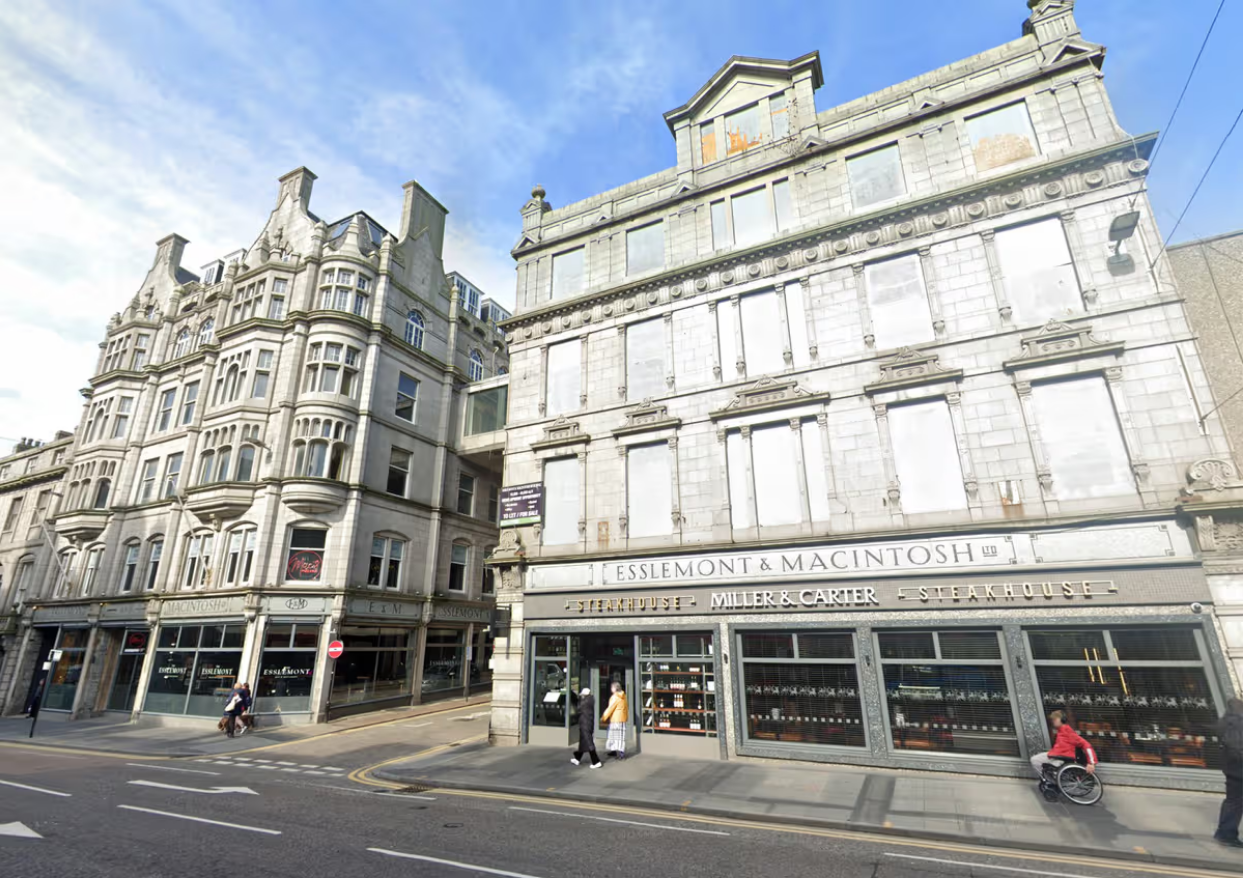
Image: Google
A long‑vacant former department store on Aberdeen’s Union Street is poised for a major residential-led transformation, with developers bringing forward proposals to convert the upper floors into new homes.
The historic Esslemont and MacIntosh building has lain empty since the retailer closed in 2007 after more than a century of trading. Since then, it has seen several unrealised redevelopment attempts, including a hotel concept that never progressed. Nearly two decades on, the site is now the focus of a fresh bid to deliver much‑needed city centre housing.
English real estate firm Crestline Assets, headed by Henry Festus Evwerhamre, has lodged plans with Aberdeen City Council following the building’s sale at auction in recent years. The proposal outlines the creation of 24 new homes within 32–28 Union Street, comprising a mix of studio, one‑bed and two‑bed apartments aimed at diversifying the city centre’s residential offer.
Ground‑floor commercial units will be retained as part of a mixed‑use approach, with Miller & Carter continuing to occupy one space. The neighbouring unit remains vacant following the closure of The Esslemont restaurant, offering future potential for complementary uses.
Developers say the scheme aligns closely with Aberdeen City Council’s ambition to reintroduce sustainable residential use to the heart of the city, supporting wider regeneration efforts along Union Street. Planning documents emphasise that the project directly addresses the long‑term vacancy of the upper floors while maintaining active frontage at street level.
To enable the conversion, significant internal reconfiguration is proposed, including reinstatement and upgrading of lift access and provision of basement cycle storage to support sustainable travel. Externally, the landmark Union Street façade will be preserved, ensuring the building continues to contribute positively to the city’s architectural character.
If approved, the development would represent a notable step in the ongoing shift toward city centre living, bringing new residents, activity and investment back into one of Aberdeen’s most prominent heritage buildings.

Share this article:

Subscribe to our newsletter to not miss articles like this one:
 SUBSCRIBE

