




Lesley Peaty: We can’t just build our way out of the housing crisis
 Reading time: 4 minutes

Lesley Peaty
Following a discussion during the Scottish Procurement Alliance AGM that focused on the nation’s housing crisis, regional director Lesley Peaty argues that if we are to find homes for all those in need in Scotland, then we need to address a problem which has been overlooked for far too long: empty homes.
We often talk about Scotland’s housing crisis as though it can be solved by building our way out of it. While increasing supply is clearly essential, I believe this framing is too narrow and risks overlooking one of the most immediate opportunities we have to make a real difference.
If we are to keep up with demand, we must also address a problem that has been overlooked for far too long: empty homes.
The most recent figures show that in 2024, Scotland had more than 43,000 homes classified as empty, with approximately 73 per cent of those vacant for more than a year.
In its four-year Housing Emergency Action Plan (2025–2029/30), the Scottish Government has pledged to deliver around 36,000 affordable homes over this period and to provide stable housing for approximately 24,000 children and families facing urgent housing needs.
Empty homes were therefore the central focus of this year’s Annual General Meeting (AGM) of the Scottish Procurement Alliance (SPA). Public sector and community partners, policy influencers and sector leaders joined us to discuss and debate how we can make better use of existing housing stock.
Among the diverse range of voices were representatives from the Scottish Empty Homes Partnership, Homeless Network Scotland and the Scottish Federation of Housing Associations (SFHA). Each shared practical guidance on managing void properties, streamlining renovations and creating sustainable pipelines to return homes to the communities that need them most.
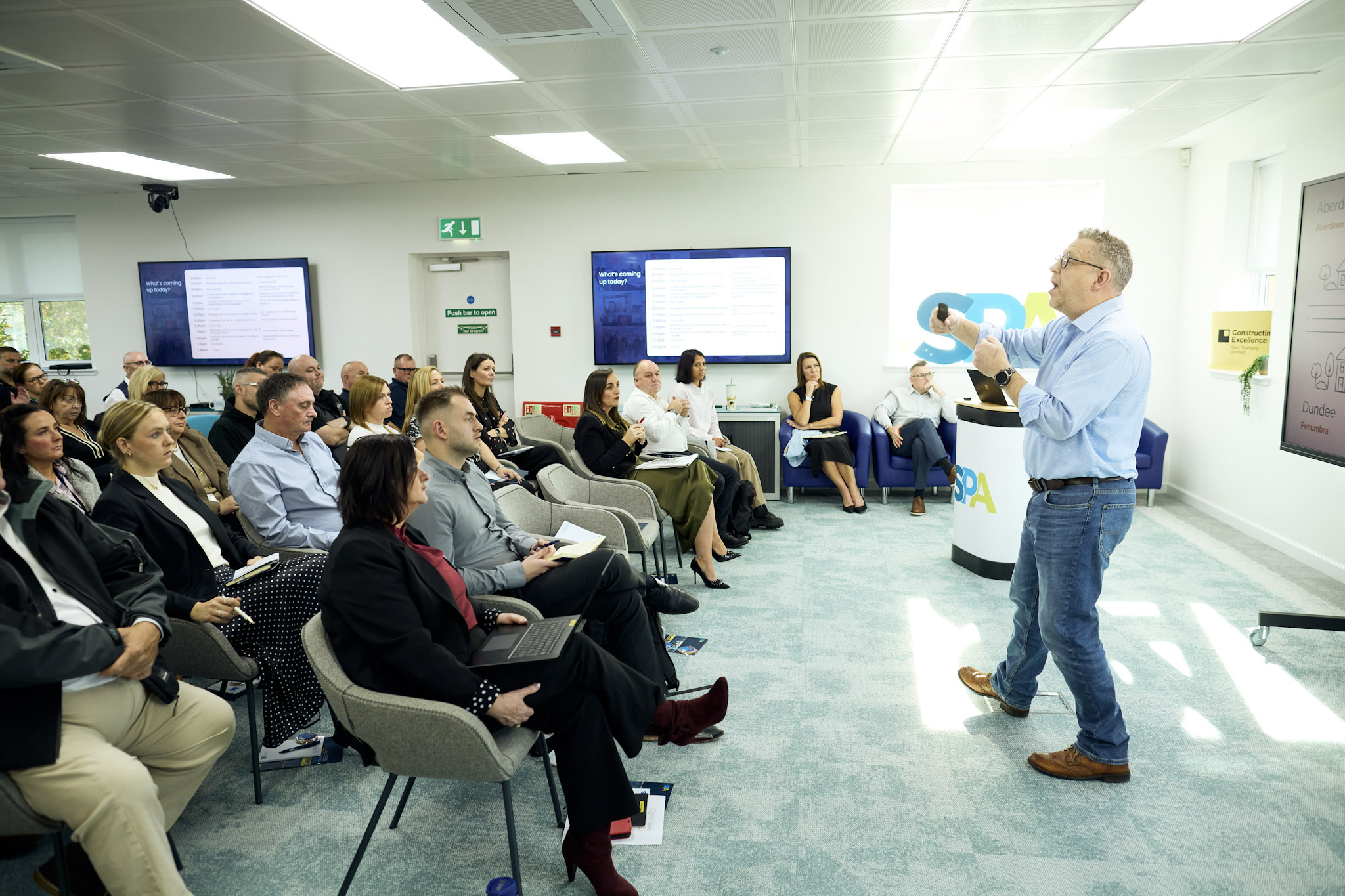
Grant Campbell from Homeless Network Scotland presents at the SPA AGM
One word, however, was repeated throughout the day: collaboration.
Grant Campbell, Head of Partnerships and Consultancy at Homeless Network Scotland, spoke powerfully about the importance of collaboration between local government, housing associations, landlords and third sector organisations if we are to tackle empty homes effectively and support people in need of secure housing.
Barry Sweeney of Homes for Good, Scotland’s first social enterprise specialising in providing homes for people on low incomes or benefits, spoke proudly about how the organisation has renovated more than 340 empty properties and brought them back into use.
He explained how practical approaches to managing and renovating void properties, streamlining processes to minimise rent loss, addressing safety concerns and overcoming challenges with utility providers all contributed to the project’s success. It is a model, he said, that others could readily replicate.
Later in the day, John Addison from the City of Edinburgh Council shared his direct experience of managing and upgrading empty properties, highlighting how energy efficiency improvements, decoration and ongoing maintenance all play a critical role in a property’s journey back to habitability.
If collaboration was the word of the day, then patience, empathy and relationship-building were its recurring themes.

Cassandra Dove from the Scottish Federation of Housing Associations takes questions from the floor
Among the many vulnerable groups in need of housing, there are some for whom the situation is particularly acute. Women and children fleeing domestic abuse are a stark example. In circumstances such as these, the seven to nine months it can take to build a new home can quite literally be the difference between life and death.
For someone sleeping rough, the warmth and safety of even the most basic home is infinitely preferable to the cold stone of the high street. Providing safety and shelter for people in desperate situations must be a priority for us all.
It was for this reason that much of the discussion at the AGM focused on the practical barriers to tackling the empty homes crisis, including rising costs, a national skills shortage, data protection challenges and the difficulty of engaging with property owners.
Without meaningful support from the Scottish Government, these issues will continue to act as blockers to bringing empty homes back into community use.
In exploring ways forward, attendees shared experiences of working closely with local supply chains, emphasised the importance of trusted contractors, and discussed the need for more flexible funding initiatives and innovative approaches to supporting vulnerable groups.
Research published in 2024 in the IOSR Journal of Mechanical and Civil Engineering underlined that access to affordable housing drives community revitalisation by attracting investment, improving infrastructure, reducing crime and stimulating business growth.
Ensuring that every person has a home leads to better health, stronger educational outcomes and a significantly higher quality of life. It also helps to create more connected and resilient communities. That is the future we should be striving for in Scotland.

Share this article:

Subscribe to our newsletter to not miss articles like this one:
 SUBSCRIBE

