

New blueprint makes financial case for digital technology in rural social housing
 Reading time: 7 minutes
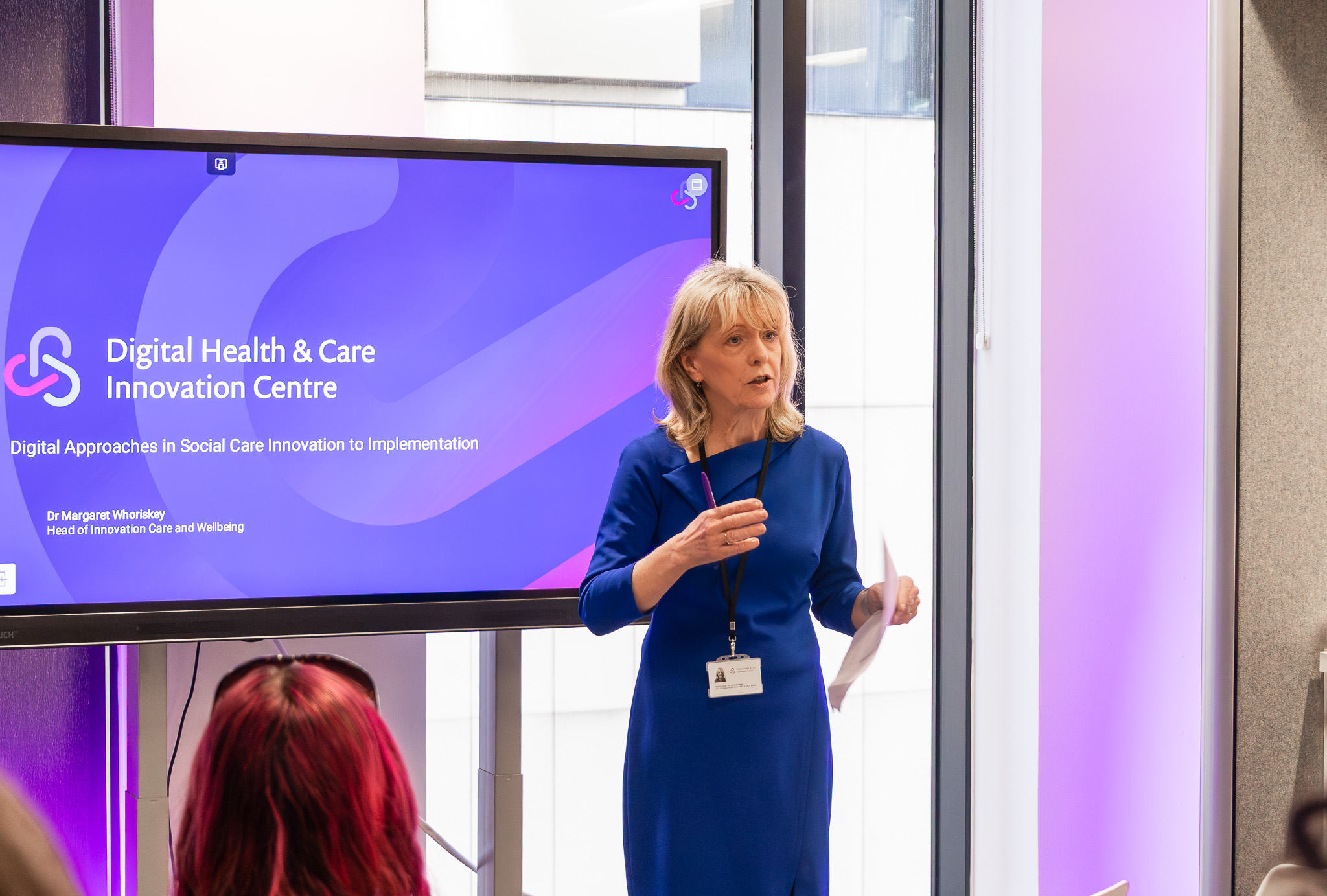
Margaret Whoriskey, head of innovation for care & wellbeing at DHI
A new blueprint published today sets out how rural homes can be designed, built and retrofitted to support healthier, lower-carbon and more independent living.
Produced by the Digital Health & Care Innovation Centre (DHI), ‘ENVISION: The Digital Blueprint for a Smart Home of the Future’ is designed to be replicated across rural Scotland and beyond, offering a practical, costed response to three of the UK’s most pressing and interconnected challenges: a health and care system under historic strain, a housing stock responsible for nearly a fifth of the country’s carbon emissions, and a population ageing faster than the infrastructure built to support it.
The blueprint was delivered as part of the £5 million Rural Centre of Excellence for Digital Health & Care Innovation, funded by the UK Government as part of the Moray Growth Deal, which supports a programme to advance digital health, social care innovation, and rural housing development.
It was produced in partnership with built environment specialists BE-ST, Moray Council, architecture practice Architype, strategic built environment and technology partner Evolve Capex, and socio-political entrepreneurs The Alternative UK.
Scotland’s future homes will need to deliver more than minimum compliance alone. Greater affordability in use, improved health and comfort, adaptability, resilience and reduced future retrofit demand are increasingly what commissioners, landlords and housing providers will expect.
The ENVISION blueprint explores how those outcomes can be delivered proportionately across different housing models, from scalable options for volume builders to longer-term rental and social housing approaches, with more ambitious specifications positioned as demonstrator propositions for those ready to go further.
Working from evidence that people spend approximately 90% of their lives indoors, and that the home environment is a direct determinant of physical and mental health, the blueprint identifies ten predictive use cases, from damp and mould risk detection to early signs of cognitive drift, where low-cost digital systems embedded at build stage can intervene before health deteriorates.
Although designed to be replicable across Scotland and beyond, the blueprint is firmly rooted in Moray. Developed with a cross-sector project delivery group, and drawing on the region’s rural realities including higher energy costs, older and harder-to-treat housing stock, patchy connectivity, and reduced access to health and care services, it positions Moray as a leading exemplar of rural digital health innovation.
The blueprint has already attracted a group of early adopters committed to testing and implementing its recommendations, including Moray Council, BE-ST, Hanover, Bield, Grampian Housing Association, Capability Scotland and The Retail Trust. Private home builders considering innovation plots through the Moray Growth Deal housing mix programme are also among those the blueprint is designed to serve.
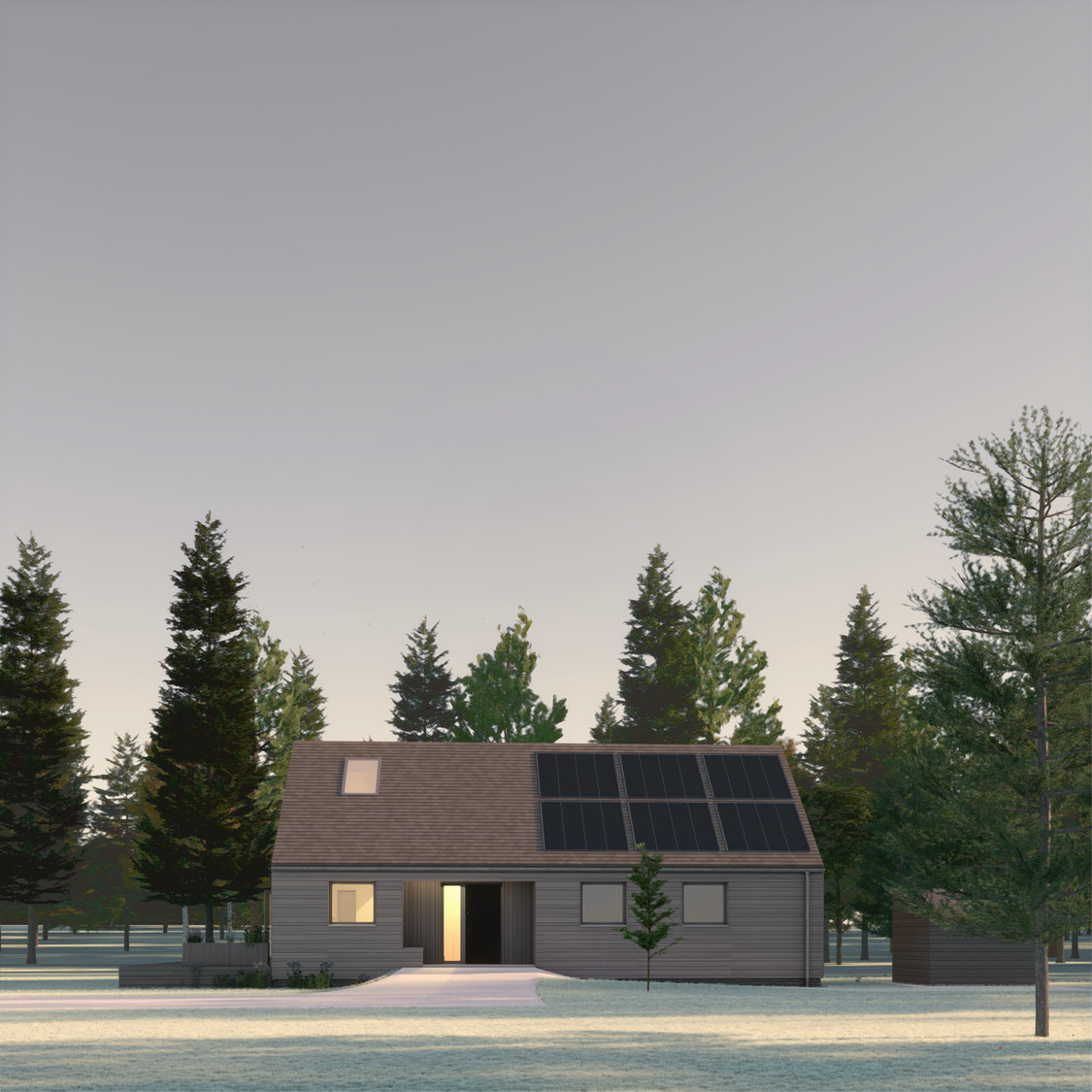
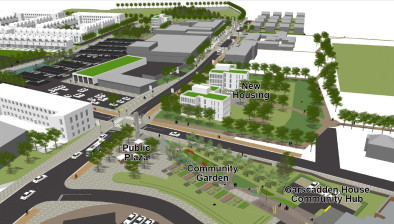
A digital render of a smart rural home (Image credit: DHI)
Margaret Whoriskey, head of innovation for care & wellbeing at DHI, said: “There is a real opportunity here to move beyond minimum standards and design homes that actively support people to live well as their health and care needs change. ENVISION reframes the home as something more fundamental, not just shelter, but preventative infrastructure.
“The technology to make that shift is available now, it is affordable, and the financial case for deploying it is strong, particularly for social landlords managing assets over the long term.”
Councillor Marc Macrae, chair of the Economic Development and Infrastructure Committee and Moray Growth Deal lead, said: “It is great to see Moray as an innovator in rural housing and digital health. Through the Moray Growth Deal, we can support solutions that respond to challenges faced in our communities such as fuel poverty and ageing housing stock.
“The ENVISION blueprint shows that homes, both new and old, can play an important role in improving health and wellbeing while also reducing energy costs and emissions.”
The blueprint situates the home at the intersection of three global challenges whose urgency has been sharply reinforced by recent data.
On health and care:
- Nearly one million older people in the UK experience persistent loneliness, a risk factor comparable to smoking 15 cigarettes a day
- Fuel poverty affects approximately 6.1 million households across the UK, with cold, damp homes directly worsening respiratory and cardiovascular conditions
- The NHS faces rising demand from demographic change with no equivalent rise in capacity
On housing and climate:
- Around 55% of UK homes already overheat during relatively cool summers, a figure set to worsen
- Operational emissions from buildings account for approximately 19% of the UK’s carbon footprint
- 80% of the buildings that will be occupied in 2050 already exist, making retrofit as urgent as new build
On rural Scotland specifically:
- Rural households face higher energy costs, older housing stock harder to treat, patchy digital connectivity, and reduced access to health and care services
- Single-occupancy living, more prevalent in rural areas, drives up per-person energy use and amplifies the risks of isolation
The blueprint responds to each of these with a phased, practically grounded approach structured across three horizons: Horizon 1 (deployable now, within 1-3 years), Horizon 2 (predictive integration, 3-7 years) and Horizon 3 (ambient intelligence and regenerative communities, 7+ years). Each horizon builds deliberately on the one before, protecting today’s investments from obsolescence.
Janette Hughes, director of planning and performance at DHI and executive lead for the programme, said: “What makes ENVISION different is that it doesn’t ask housing providers to take a leap of faith. Horizon 1 is built entirely from proven technology that is deployable today.
“The sensors, the edge computing, the basic health monitoring - none of it is experimental. What’s new is the framework for bringing it together coherently, and the evidence that doing so is financially defensible. We wanted to give commissioners and housing providers something they could actually use.”
The analysis finds that the preferred Horizon 1, Level 2 specification adds £33,121 per dwelling above the policy baseline, around 11% of total build cost, with the digital infrastructure itself representing only around 1.4% of that. When combined with a Passivhaus-grade fabric specification, the model reduces annual maintenance costs by £1,470 per dwelling and turns a projected £1,320 annual operating deficit for a social landlord into a £403 surplus.
At the heart of the blueprint is a Home Operating System (HOS), a low-power edge computing hub that integrates all sensors and controls, including indoor air quality, temperature, movement, humidity and sleep patterns, and runs automation and predictive modelling locally, without streaming sensitive data to the cloud.
In practical terms, the system can detect rising humidity patterns that precede visible damp and mould formation by days; identify early signs of cognitive drift or mobility decline before they become safety risks; flag fuel poverty under-heating and suggest safe heating cycles; and recognise patterns of loneliness and social withdrawal associated with depression and accelerated cognitive decline.
Crucially, all data processing happens inside the home. Nothing is shared with landlords, care services or health providers without explicit resident consent. The blueprint sets out a governance model designed around resident agency, described as ‘local first, cloud optional’, and is built on open protocols to avoid vendor lock-in.
For rural communities where broadband reliability cannot be guaranteed, the system is designed to function at full capacity for essential functions, including heating, ventilation and safety, even in the event of complete connectivity loss.
Although the blueprint was developed for rural Moray under the UK Government’s Growth Deal investment, its authors are explicit that its principles apply far beyond its origin. The three-horizon framework, the affordability analysis, and the technology stack have all been designed for replication across different tenures, geographies, and housing types.
Kaye Keenan, impact manager at BE-ST, said: “BE-ST is delighted to support this DHI blueprint, providing guidance and support around sustainable construction and innovation. By prioritising construction methods and materials with low embodied energy, it aligns with Scotland’s net zero ambitions whilst also considering rural-specific design challenges. The design of the blueprint is a great opportunity for creating embedded adoptability in smart rural homes.”

Share this article:

Subscribe to our newsletter to not miss articles like this one:
 SUBSCRIBE