


New book reveals how community-led housing reshaped Scotland
 Reading time: 2 minutes
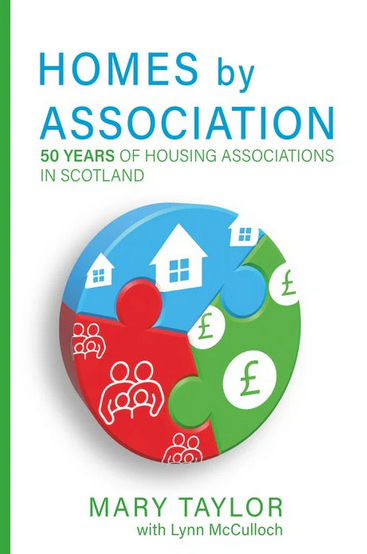
At a time when Scotland faces ongoing challenges around housing affordability, community regeneration and the delivery of high-quality homes, a new book offers a timely exploration of one of Scotland’s most significant yet often overlooked social success stories.
Written by former Scottish Federation of Housing Associations CEO Mary Taylor with Lynn McCulloch, who also has wide experience of leadership in social housing, Homes by Association: 50 Years of Housing Associations in Scotland examines how housing associations have transformed the housing landscape. Since the 1970s, these community-based, not-for-profit organisations have grown from small local initiatives into a sector that provides homes for hundreds of thousands of people across Scotland.
Drawing on decades of professional experience, research, photographs, case studies and interviews, author Mary Taylor traces the evolution of housing associations from grassroots campaigns to major social institutions. The book highlights the people, communities and ideas that helped reshape neighbourhoods, tackle poor housing conditions and create lasting local change.
“Scotland’s housing associations have often worked quietly behind the scenes,” says Taylor. “Yet they have transformed lives, regenerated communities and demonstrated how locally governed, not-for-profit organisations can deliver lasting social value.”
Kirsty Wark has also endorsed the book, describing it as “a fascinating and timely addition to Scotland’s social history, especially when we are planning new homes for the future”.
The book also explores lessons for the future. As governments, policymakers and communities search for solutions to housing shortages and rising costs, Homes by Association examines how a model built around community leadership, long-term stewardship and reinvestment rather than shareholder profit has delivered affordable housing across cities, towns, rural communities and islands throughout Scotland.
Homes by Association will appeal to readers interested in housing, public policy, community development, Scottish social history and the future of affordable housing. It is available via Porto Press.

Share this article:

Subscribe to our newsletter to not miss articles like this one:
 SUBSCRIBE