
Report: Fewer children living in temporary accommodation across Falkirk area
 Reading time: 2 minutes

The number of children living in temporary accommodation in Falkirk has reduced by almost 50% compared with a year ago, with more families moving into settled homes and hundreds of additional affordable homes becoming available across the area.
A report being considered by Falkirk Council’s Executive on 8 October shows the number of children living in temporary accommodation fell from 198 to 100 during 2025/26.
Households are moving into settled accommodation more quickly, with the average time spent in temporary accommodation falling from 164 days to 144 days.
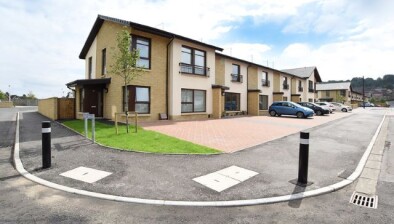
At the same time, 255 affordable homes were delivered across the Falkirk area, more than double the 123 completed the previous year and above the council’s annual affordable housing target. The total includes new council housing, housing association developments and former council homes brought back into public ownership through buyback schemes.
Looking ahead, plans are in place to deliver a further 1,200 affordable homes across the Falkirk area between 2027 and 2032.
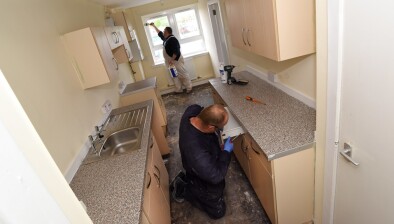
Investment in existing housing also continued throughout the year. Almost 1,000 council homes benefited from energy efficiency improvements through window and door replacement programmes, while heating and infrastructure improvements were carried out in a further 488 homes.
As a result, 91.9% of council homes now meet the Scottish Housing Quality Standard, up from 82.7% the previous year and higher than the Scottish average. Energy efficiency performance continues to be strong, with 96.4% of council homes meeting the current Scottish national social housing energy efficiency standards.
The council also helped bring 32 long-term empty homes back into use during the year, increasing housing availability.
Director of transformation, communities and corporate services, Karen Algie, said: “The fall in the number of children living in temporary accommodation is important because it means more families are getting the stability of a settled home.
“Demand for housing remains high, and we are not underestimating the pressure on services or on households who need support. But the figures show real progress: more affordable homes are being delivered, families are moving on from temporary accommodation more quickly, and investment in existing council homes is improving standards for tenants.
“That matters at a time when housing services across Scotland are under significant pressure.
“The report gives elected members a clear picture of what has changed over the past year, what still needs to be done, and the investment planned for the years ahead. We hope members will endorse the recommendations when it comes before Executive.”

Share this article:

Subscribe to our newsletter to not miss articles like this one:
 SUBSCRIBE