


Scottish Labour warns of gaps in Awaab’s Law
 Reading time: 3 minutes
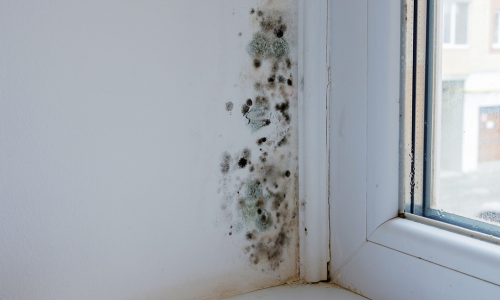
Caption
Scottish Labour has said that Awaab’s Law has many gaps which could prompt families to face damp and mould in their temporary accommodation, with Scottish Labour’s housing spokesperson, Mark Griffin MSP, calling for answers on plans to extend accommodation protections.
Having become effective in Scotland in October, Awaab’s Law, which works to protect homeless children in Scotland, lays out legal timescales for landlords to investigate and tackle damp and mould hazards.
However, some forms of temporary accommodation are not covered by its protections.
This means the type of accommodation a family is living in might conclude the strength of their legal protection.
The independent Regulatory Review Group has also expressed worries about these gaps, prompting Scottish Labour Housing Spokesperson Mark Griffin MSP to write to the Cabinet Secretary calling for answers on plans to extend protections to all temporary accommodation.
Griffin said in the letter: “Throughout scrutiny of the legislation, I consistently raised concerns that households in temporary accommodation should not receive weaker protections against damp and mould than those living in the social or private rented sectors.
“The [Regulatory Review] Group noted that the regulations will not cover all properties used for short-term lets, temporary accommodation for homeless households or temporary workforce accommodation, and suggested that consistency across the rented housing market should be considered as implementation progresses.”
Griffin also said: “Given the continuing housing emergency and the record numbers of households, including children, living in temporary accommodation, it is vital that those living in some of the most precarious housing circumstances are not left with weaker protections against damp, mould and associated health hazards.”
Griffin has requested information on the extent of progress made since March this year in “exploring the extension of Awaab’s Law protections to forms of temporary accommodation not currently covered by the regulations.”
In the letter, the MSP has also asked for answers on what engagement has gone ahead with local authorities, housing providers, homelessness organisations and tenant representative bodies concerning this issue.
The MSP has also called for answers on whether the Scottish Government will “bring forward proposals” for extending these protections to all types of temporary accommodation and what assessment has been carried out concerning the “prevalence of damp and mould hazards” within the temporary accommodation that is not covered by the regulations.

Share this article:

Subscribe to our newsletter to not miss articles like this one:
 SUBSCRIBE