


Carbon Futures: What makes a truly healthy home?
 Reading time: 8 minutes
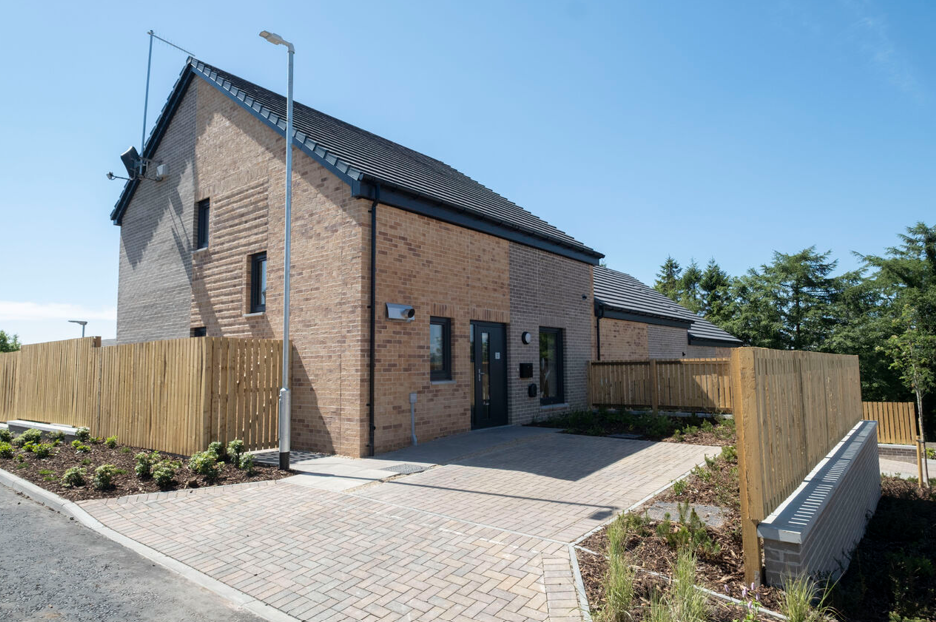
Pappert Passivhaus (Image credit: CCG)
As Scottish Housing Day 2026 highlights the links between housing and health, Carbon Futures considers how better building performance can support healthier, more comfortable and more affordable homes.
The quality of the homes people live in has a direct influence on their health, wellbeing and quality of life. From indoor air quality and moisture management to energy costs, thermal comfort and the materials used in construction, creating a healthy home requires more than simply meeting minimum performance standards.
That is particularly relevant as the housing sector considers this year’s Scottish Housing Day theme, ‘Healthy Homes, Healthy Futures’, which puts the relationship between housing, physical health and mental wellbeing firmly in the spotlight.
For Carbon Futures, healthy homes are closely connected to the way buildings are designed and how their different systems work together. As an independent energy and sustainability consultancy focused on decarbonising the built environment, the company takes a whole-building approach that considers energy performance, carbon emissions, comfort and the experience of the people who ultimately occupy a building.
Fresh air and moisture management
One of the fundamental elements of a healthy home is good indoor air quality.
As homes become increasingly airtight to reduce energy demand and heat loss, ventilation becomes ever more important. Mechanical Ventilation with Heat Recovery (MVHR) can provide a continuous supply of filtered fresh air while extracting stale, moisture-laden air from kitchens, bathrooms and other areas where humidity can build up.
Effective moisture management is particularly important because excessive humidity can create conditions that contribute to mould growth and increased house dust mites, which can lead to health concerns for occupants including eye and skin irritation, asthma and, in more serious cases, respiratory infections.
The introduction of Awaab’s Law in Scotland further underlines the importance of tackling damp and mould. From 6 October 2026, landlords will be required to investigate reports of damp or mould and, where substantial damp or mould is identified, begin necessary repairs within defined timescales. While ventilation is only one part of addressing damp and mould, designing homes to manage moisture effectively and provide adequate ventilation can help prevent the conditions in which these problems develop.
MVHR can also support comfort in other ways. By allowing homes to be designed with lower air permeability, it can reduce heat loss from uncontrolled infiltration and help minimise draughts. Summer bypass functions can also reduce the risk of overheating, with systems incorporating active cooling where appropriate.
However, simply specifying MVHR does not guarantee a healthy or comfortable home. System design, installation and commissioning are critical. Poorly designed systems can contribute to under-ventilation, excessive noise and unnecessary energy losses.
The consultancy recommends that MVHR systems are designed in line with Passivhaus principles, with consideration given to factors including noise, ventilation ductwork heat loss and system energy use. Its work on Pappert and Blawarthill Place, two recently completed Passivhaus affordable housing developments, incorporated MVHR systems designed, installed and commissioned to Passivhaus requirements. Carbon Futures is continuing this approach on Passivhaus projects for East Dunbartonshire Council, with the first of these projects due to commence on site this month.
Beyond Passivhaus, projects at Howwood Road and Gallowhill West for Renfrewshire Council demonstrate how ambitious energy performance targets can make high levels of airtightness necessary, while carefully designed ventilation ensures that indoor air quality is maintained.
The lesson is clear: as homes become more energy efficient, ventilation needs to be considered as an integral part of building performance rather than as a standalone system.
Healthy materials, healthy homes
Creating a healthy home is not only about the air brought into a building. It is also about the materials used to construct and finish it.
Many common building products and finishes can release volatile organic compounds (VOCs) into the indoor environment. Ventilation can help manage indoor pollutants, but selecting materials with low emissions can reduce those pollutants at source.
This creates an important connection between material health and whole life carbon. Decisions about materials can influence both embodied carbon and the quality of the indoor environment, while reducing reliance on fossil-derived products can present opportunities to address both issues.
The company’s Green Lite and Green Plus detail packs have explored alternative approaches to the use of PIR insulation within building superstructures. Its retrofit work has also incorporated wood-based insulation and lime plaster, including vapour-open wall build-ups that can support moisture management while reducing reliance on more petrochemical-based materials.
That does not mean that a material should automatically be considered preferable simply because it is described as ‘natural’.
Healthy material selection requires a whole-building assessment. Moisture behaviour, durability, thermal performance, airtightness, fire performance and indoor air quality all need to be considered alongside embodied carbon and the origin of the materials.
There is also an opportunity for the industry to become more proactive in how it considers VOC emissions. While there are currently no specific requirements for VOC emissions from materials in housing, other parts of the public sector are beginning to show how material health can be addressed through project briefs and performance targets.
Carbon Futures has adopted this approach on several of its education projects, using the Net Zero Public Sector Buildings Standard’s Indoor Environmental Quality provisions to establish healthy material performance targets from the outset.
This reflects a wider principle. Indoor environmental quality should not be an issue that is considered at the end of a project; it should be embedded into the brief and design process from the beginning.
From energy efficiency to wellbeing
A healthy home also needs to be an affordable and comfortable home.
The relationship between housing and mental wellbeing is sometimes less visible than the physical impacts of poor housing but living in a home that is difficult to heat, uncomfortable or affected by damp and cold can create additional financial and emotional pressures.
Reducing energy demand can therefore deliver benefits beyond carbon reduction. A well-designed, energy-efficient home can be easier and less expensive to heat, helping to reduce running costs and, particularly in social housing, supporting households that may be vulnerable to fuel poverty.
This is why Carbon Futures takes a whole-dwelling approach, considering the building fabric, ventilation, heating systems and low and zero carbon technologies as an integrated package rather than assessing individual measures in isolation.
Passivhaus projects provide a good example of this approach. Through careful specification, detailed design and rigorous quality assurance, Passivhaus seeks to deliver highly efficient buildings with low energy demand while maintaining a comfortable indoor environment.
At Pappert in Bonhill, for example, six homes were constructed to Passivhaus Classic standard, while a further 20 homes were designed to achieve Platinum Level under Section 7 of the Scottish Building Standards. The development combines enhanced fabric performance with air source heat pumps, solar PV and battery storage, demonstrating how energy efficiency, renewable technologies and building performance can work together to reduce operational energy demand and running costs.
Elsewhere, Carbon Futures has worked on projects connected to district heat networks, including Queens Quay, helping to support efficient, low-carbon heating at a larger scale.
At Dundashill in Glasgow, the consultancy’s role has extended from developing the initial energy strategy through to acting as Energy Champion, supporting the project during construction and carrying out post-occupancy evaluation. This involvement provides an opportunity to consider not only whether a building has been designed to perform, but whether it ultimately performs as intended.
Designing for people as well as performance
The challenge for the housing sector is not simply to build homes that use less energy.
Healthy homes need to be warm without being expensive to heat, well-ventilated without creating unnecessary energy demand, airtight without compromising indoor air quality, and energy efficient without sacrificing comfort.
They also need to be designed with consideration for the materials that occupants live alongside every day and the long-term performance of the building as it is occupied.
Scottish Housing Day 2026 provides an opportunity to look at housing through this wider lens. The theme of ‘Healthy Homes, Healthy Futures’ recognises that the benefits of good housing extend well beyond the building itself, supporting physical health, mental wellbeing, financial resilience and stronger communities.
For Carbon Futures, that means treating health, comfort, energy performance and carbon reduction as interconnected objectives rather than competing priorities.
The homes of the future should not simply use less energy. They should be affordable to heat, comfortable to live in, resilient to changing environmental conditions and designed to support the health and wellbeing of the people who call them home.
That is what makes a healthy home a foundation for a healthy future.

Share this article:

Subscribe to our newsletter to not miss articles like this one:
 SUBSCRIBE