Crown Estate Scotland wins climate award for rural housing decarbonisation programme
 Reading time: 3 minutes
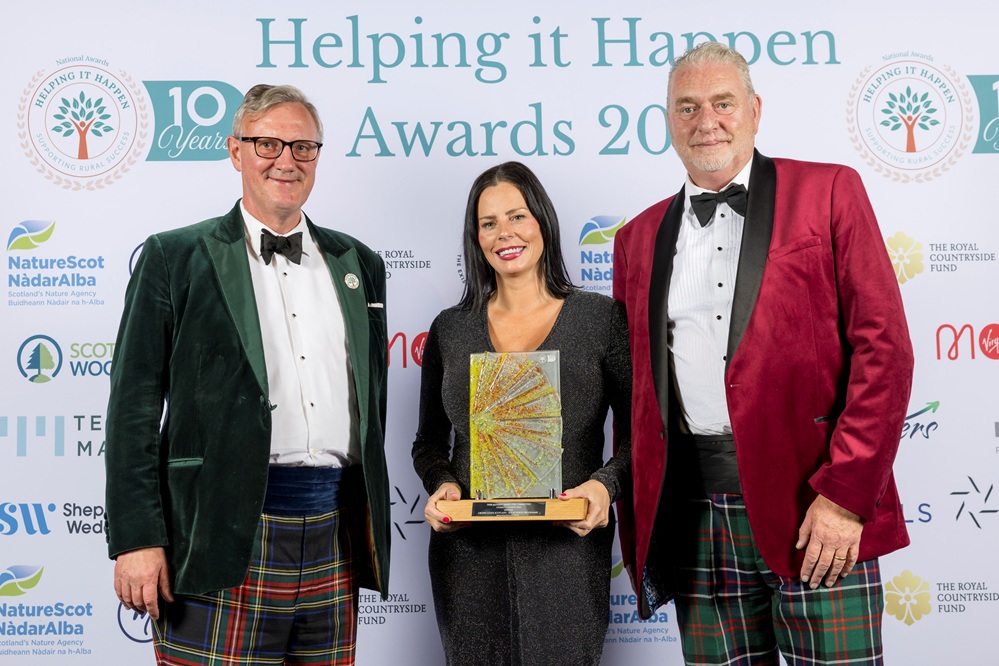
(from left) Andrew Linehan (Murray Beith Murray), Vicky MacKay (Crown Estate Scotland), Tony Stevenson (SLE)
Crown Estate Scotland’s approach to decarbonising rural housing has been recognised at Scotland’s flagship rural awards, hosted by Scottish Land & Estates (SLE).
The organisation won the Iver Salvesen Award for Combatting Climate Change, sponsored by Murray Beith Murray, for its Solar North programme at the Helping it Happen Awards, which celebrated their 10th anniversary this year.
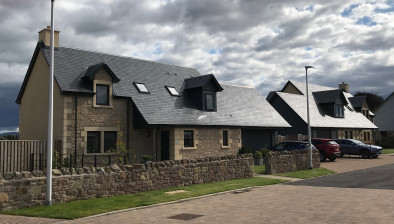
Solar North Phase 1 combines solar photovoltaic panels, battery storage, hot water diverters and electric vehicle charging infrastructure across rural tenanted properties, delivering measurable reductions in carbon emissions while improving energy efficiency and resilience.
The programme has been designed as a scalable and replicable model for rural housing decarbonisation, balancing environmental ambition with the practical challenges of retrofitting geographically dispersed, traditionally constructed homes.
By integrating renewable energy generation with storage and smart energy use, the systems enable homes to generate electricity on-site and retain it for use when demand is highest. Hot water diverters use surplus electricity to heat water, while electric vehicle charging infrastructure supports tenants to move towards low-emission transport.
Delivery required bespoke system design to accommodate differences in building fabric, orientation and grid connectivity. The programme prioritised intuitive, low-maintenance technologies, alongside guidance and practical support for tenants to help them make effective use of the installed systems.
The approach also balances upfront investment with long-term operational savings and carbon reduction, providing a framework that can be rolled out across a wider property portfolio.
The success of Phase 1 provides a platform for expansion to additional homes. Future phases could incorporate complementary technologies such as heat pumps, alongside enhanced energy monitoring and further tenant engagement.
The Helping it Happen Awards honour the businesses, community projects and individuals from across rural Scotland making an outstanding contribution to the rural economy, communities, wildlife and the environment. In all there have been 94 recipients of Helping It Happen awards since 2017, with 1,000 case studies showcasing the talent and creativity of the sector.
Organised by SLE with headline sponsor NatureScot, the ceremony was attended by rural politicians and representatives from rural organisations, businesses and communities.
Sarah-Jane Laing, chief executive of Scottish Land & Estates, said: “At a time when rural Scotland faces significant economic, environmental and social challenges, these awards demonstrate the scale of innovation, resilience and leadership being shown by individuals, businesses and community organisations across the country.
“Whether it is supporting mental wellbeing, tackling climate change, educating young people or creating new economic opportunities, every winner demonstrates that rural Scotland is not standing still. It is adapting, investing and leading.
“It has been a privilege over the past ten years to celebrate the individuals, businesses and community projects making such a positive difference across rural Scotland. Together, they tell a powerful story of innovation, determination and community spirit, and of a rural economy that continues to evolve and thrive.”
NatureScot deputy director of green economy, Claudia Rowse, said: “When people and nature come together in the fight against climate change, we can achieve truly remarkable things. It has been a privilege to be a judge at these Helping it Happen Awards and to see so many people taking positive action for nature, climate, the economy and communities.
“I have been so impressed by the standard of applications, showcasing the energy and commitment happening right across Scotland. This year’s nominees reflect the positive and sustainable work that so many individuals, estates, farms and rural businesses are doing to support their communities and nature.”

Share this article:

Subscribe to our newsletter to not miss articles like this one:
 SUBSCRIBE