

Written by:

Gillian McLees: A CIH Scotland director focused on evolution, collaboration and a more professional workforce
 Reading time: 4 minutes
Written by:
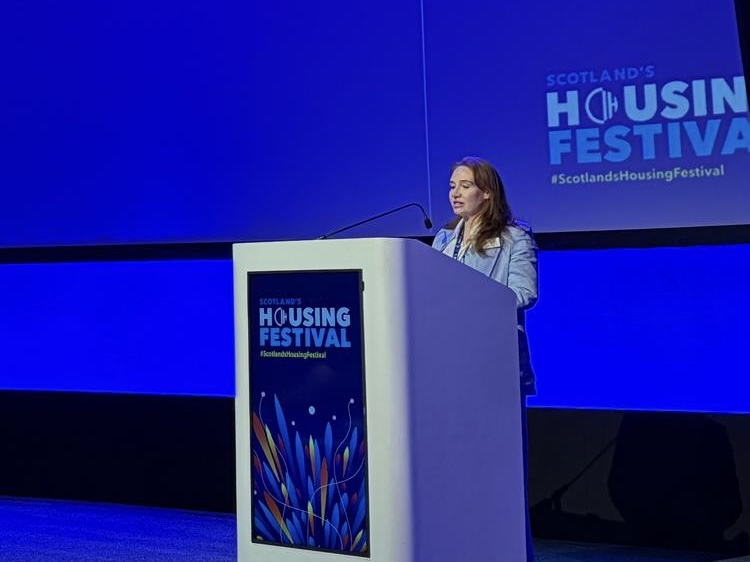
Gillian McLees delivers her first speech as CIH Scotland director
Gillian McLees arrived at her first Scotland’s Housing Festival as CIH Scotland director with a message that set the tone for her leadership: evolution, not revolution.
It’s a phrase she has used more than once in conversation, and it captures her belief that the organisation doesn’t need to be rebuilt; it needs to grow with the sector it serves.
That balance of continuity and change runs through her early priorities, her call for deeper cross‑tenure collaboration, and her determination to strengthen the skills and professionalism of Scotland’s housing workforce.
McLees steps into the role at a moment shaped by overlapping pressures: a national housing emergency, rising homelessness, and a Scottish Parliament election that could bring as much as a 43% turnover in MSPs.
“We can’t make systemic and fundamental change without the involvement of government. These housing emergencies need action and agility and swiftness,” McLees said, emphasising that the sector cannot afford slow responses.
To that end, she is clear that political engagement will be central to CIH Scotland’s work in the months ahead. With so many new MSPs expected, she believes the sector has a responsibility to ensure incoming politicians understand the realities facing frontline staff and tenants.
“We need to make sure any new MSPs understand what our members are telling us, what front‑facing staff are experiencing on a daily basis.”
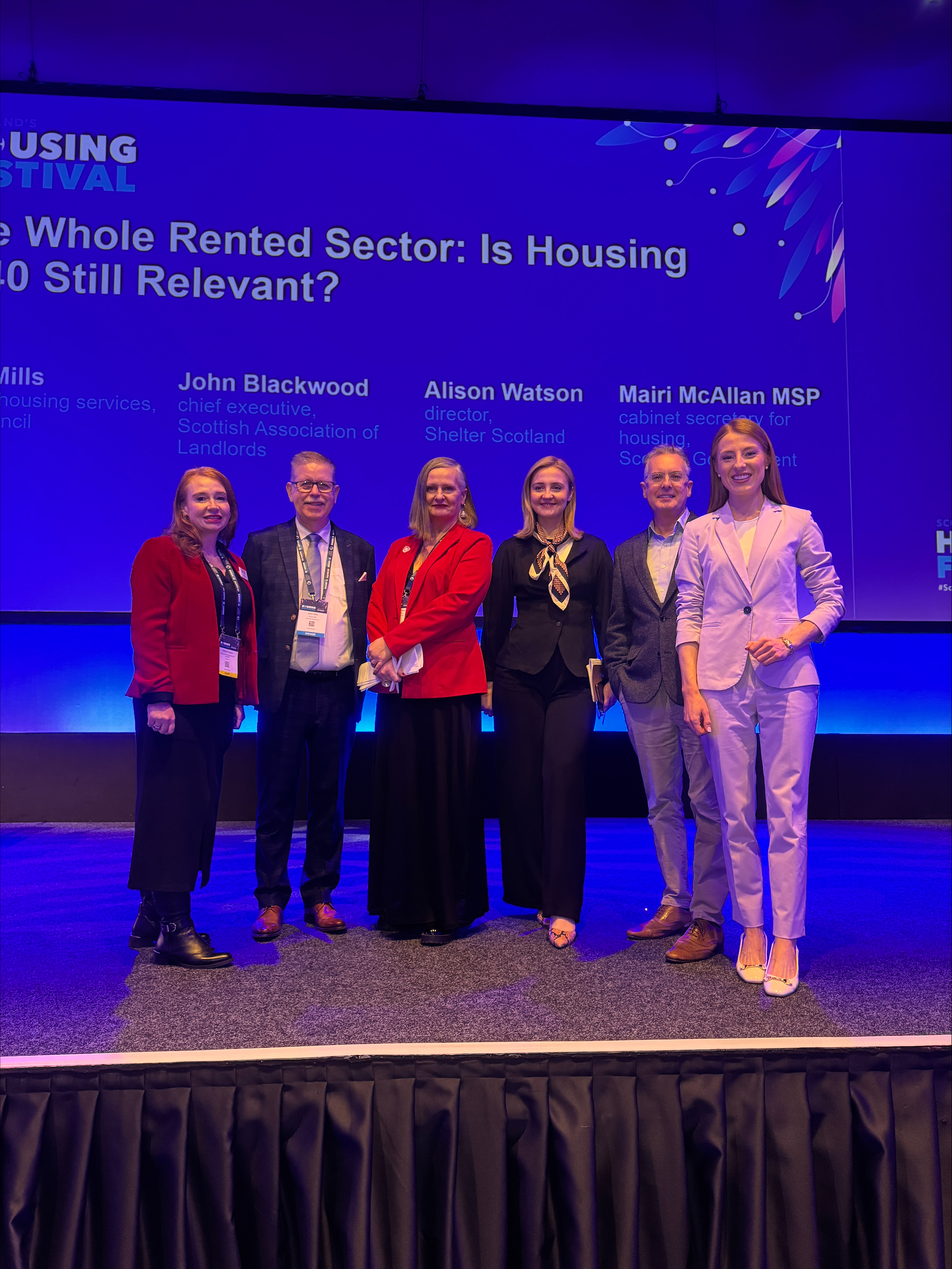
Gillian on stage with John Mills from Fife Council, John Blackwood from Scottish Association of Landlords, Shelter Scotland's Alison Watson, housing secretary Màiri McAllan and STV's Vanessa Taffe
McLees is quick to acknowledge the strong foundations left by her predecessor, Callum Chomczuk. CIH Scotland, she says, is respected, established and influential. But she is equally clear that standing still is not an option.
“I don’t need to come in, troubleshoot, fix. I don’t need to cause a revolution… But what I do want to do is evolve the organisation, grow the organisation. Nobody should stay the same.”
Her vision is for CIH Scotland to adapt alongside a sector that is itself changing, particularly as Scotland moves toward a more integrated, all‑tenure housing system. She sees CIH’s role as widening its reach, strengthening its relevance, and ensuring that professionalism and continuous development are embedded across every part of the housing ecosystem.
Having worked across social housing, PRS, mid‑market rent, build‑to‑rent and student accommodation, McLees is a strong advocate for cross‑tenure collaboration. But she acknowledges that cultural barriers remain.
“Everybody can be a little bit protective of their little bit of the pot… If I share my good practices with you, it’s going to make you better and me worse.”
She believes this “scarcity mindset” is holding Scotland back at a time when the sector needs to work as a single system. With build‑to‑rent numbers projected to quadruple in five years, she sees a major opportunity to bring new landlords into the fold and raise standards through shared professional development. “There’s a huge place for them to come in and join us… so that we can help guide the professionalism and continuous personal development of our staff.”
One of McLees’ first tasks has been listening to CIH Scotland members, and the message has been consistent. “They’re struggling to do more with less,” she said, describing the daily trade‑offs between homelessness pressures, asset management, and competing policy demands.
This feedback underpins the research report she launched at the Festival, which explores leadership, culture and professional development across Scotland’s social housing sector. Shaped by candid conversations with practitioners, tenants and regulators, the report reflects a workforce that wants to feel valued, confident and equipped for the challenges ahead.
Crucially, members told CIH Scotland they want a new social housing charter that supports skills, professionalism and recognition, but not through a mandated approach. “They don’t want it to be mandated… CIH Scotland has gone out and asked the members before it’s got to that point, so we can make the case.”
For McLees, this is where CIH Scotland’s role is clearest: championing the profession, amplifying members’ voices, and ensuring the sector’s contribution is recognised alongside teaching, social work and other public‑facing roles.

Share this article:

Subscribe to our newsletter to not miss articles like this one:
 SUBSCRIBE