





Written by:

Queens Quay heat network delivers lower bills and stronger tenancies
 Reading time: 4 minutes
Written by:
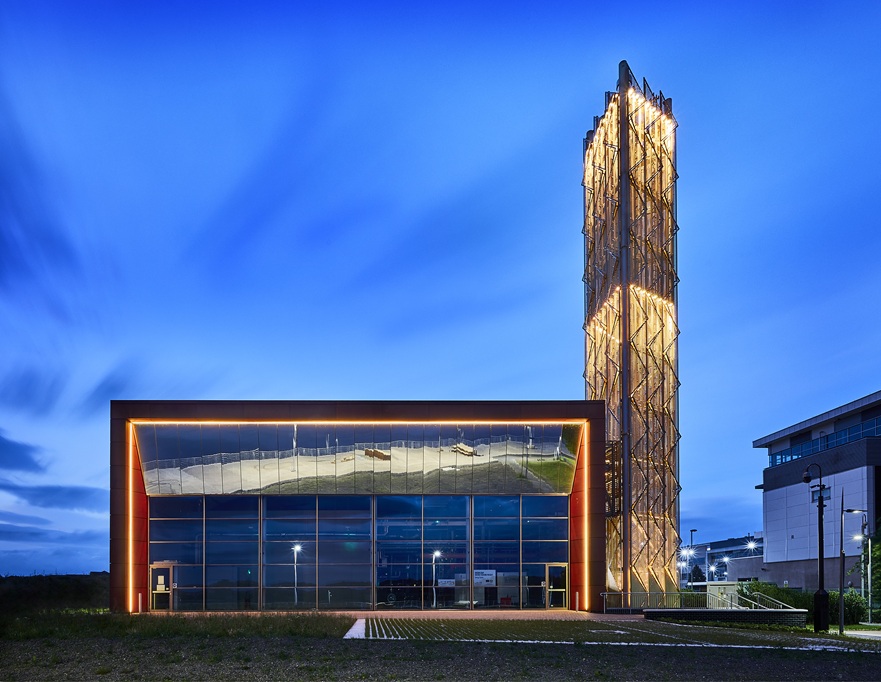
Five years after Scotland’s first large‑scale water‑source heat pump went live at Queens Quay, the district heat network designed and delivered by Vital Energi is now supplying hundreds of homes across Clydebank.
The 147-unit Queens Quay housing development, at Clydebank’s waterfront, was a joint project by West Dunbartonshire Council, Loretto Housing Association and Clydebank Housing Association (CHA). For CHA, the expansion has transformed some of its hardest‑to‑heat stock and delivered measurable improvements in affordability, health and tenancy sustainment.
CHA’s housing services manager, Jack Devlin, reflected on the impact on residents and the organisation, and why CHA is now looking to expand connections further.
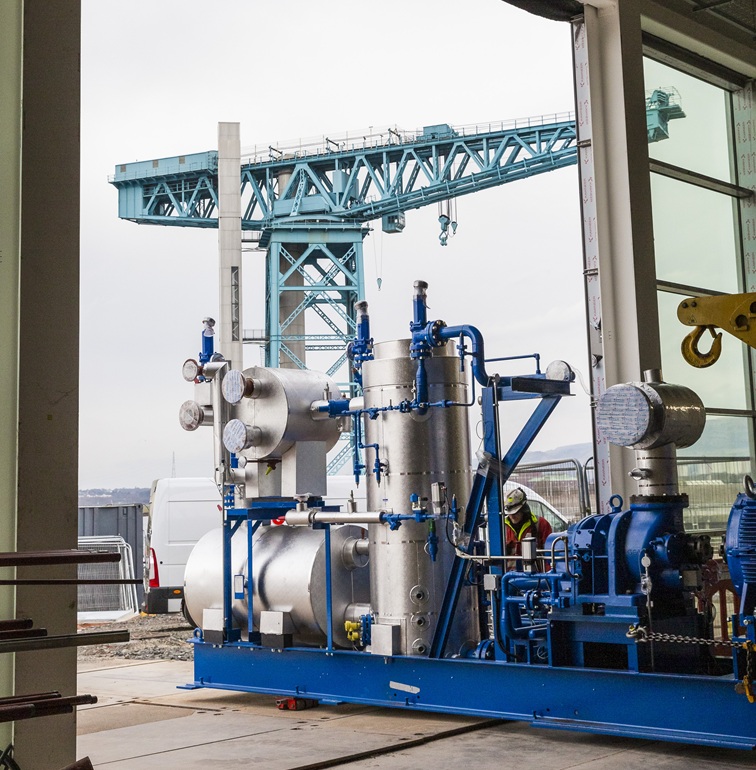
The heat pump arriving (With the titan crane in the background)
CHA’s involvement spans two contrasting developments. At Queens Quay, these new build modern flats were designed with external risers and straightforward network integration, whereas at its Dumbarton Road site, the 45 homes were pre-1919 sandstone tenements with ageing electric storage heaters and limited resident control.
It was the older stock that presented the greatest challenge. “The storage heaters simply weren’t efficient,” Jack explained. “Bills were high, heat output was poor, and many residents had switched them off entirely and were relying on convector heaters.”
A resident survey revealed monthly heating costs of £250–£350, with one household paying £425. One tenant even left their home due to unaffordable energy bills. The consequences were predictable: cold homes, damp and mould risk, and negative health impacts.
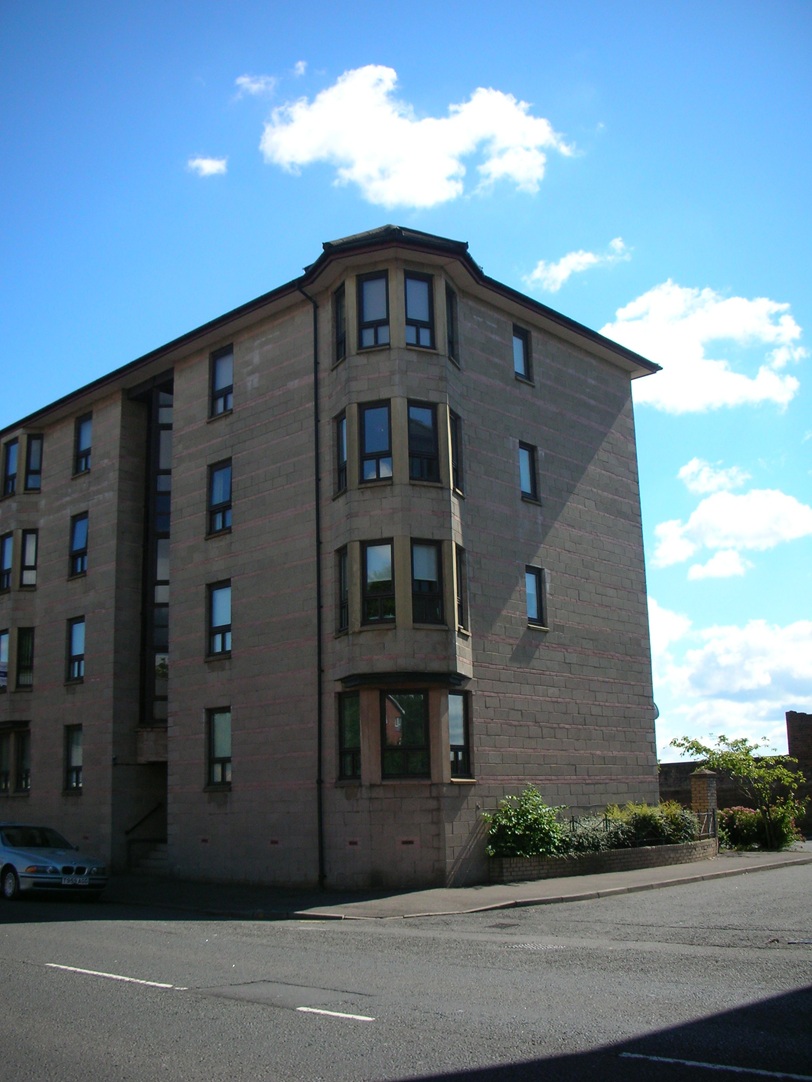
Homes on Dumbarton Road
CHA explored a range of technologies, including gas, before West Dunbartonshire Council highlighted the opportunity to connect to the Queens Quay heat network. Vital Energi supported the association with technical advice and financial modelling to understand long‑term affordability for residents.
Once district heating emerged as the strongest option, CHA secured a blend of funding through the Scottish Government’s Social Housing Net Zero Heat Fund and private funding through a CAF Bank Green Loan. Inflation during the application period forced several budget revisions, but the business case held.
Despite the scale of retrofit required at Dumbarton Road, disruption was limited. External risers simplified the new‑build installations, while internal works in the tenements were completed efficiently.
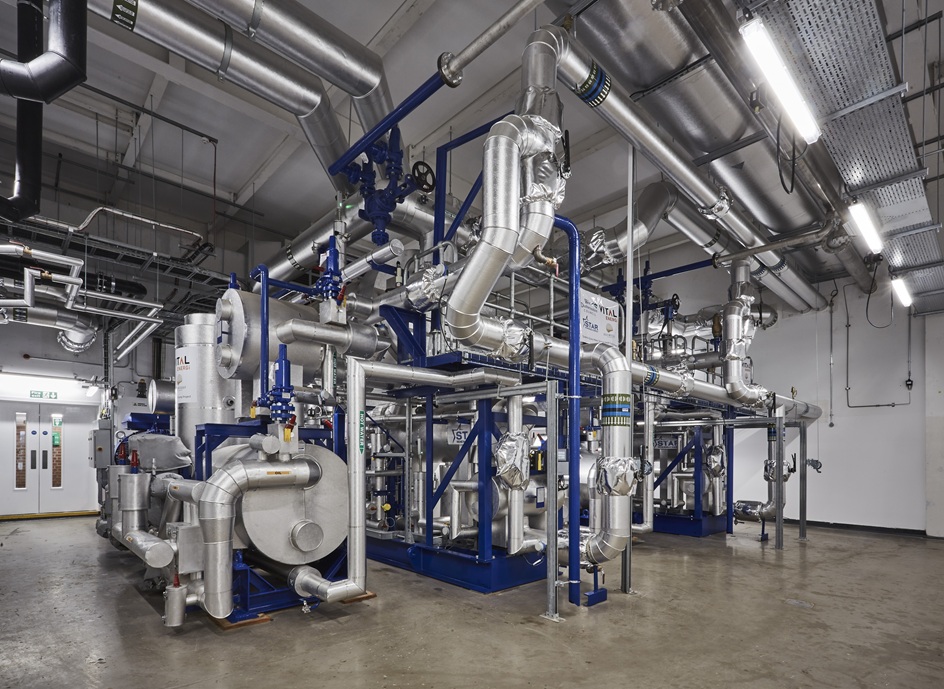
The water source heat pump in place
Vital Energi’s engineers refined their approach to complete each flat in a single day, with a short follow‑up visit for cosmetic finishing. “Residents were really positive,” Jack said. “Most were looking forward to the new system.”
The financial impact has been dramatic. Heating bills have fallen by 70–80%, with CHA absorbing the service charge to maximise resident benefit.
But Jack emphasises that the gains go beyond pounds and pence. “People are using their heating properly again. Homes are warmer, and we’re seeing fewer issues with damp and mould. The health and mental‑health implications are significant.”
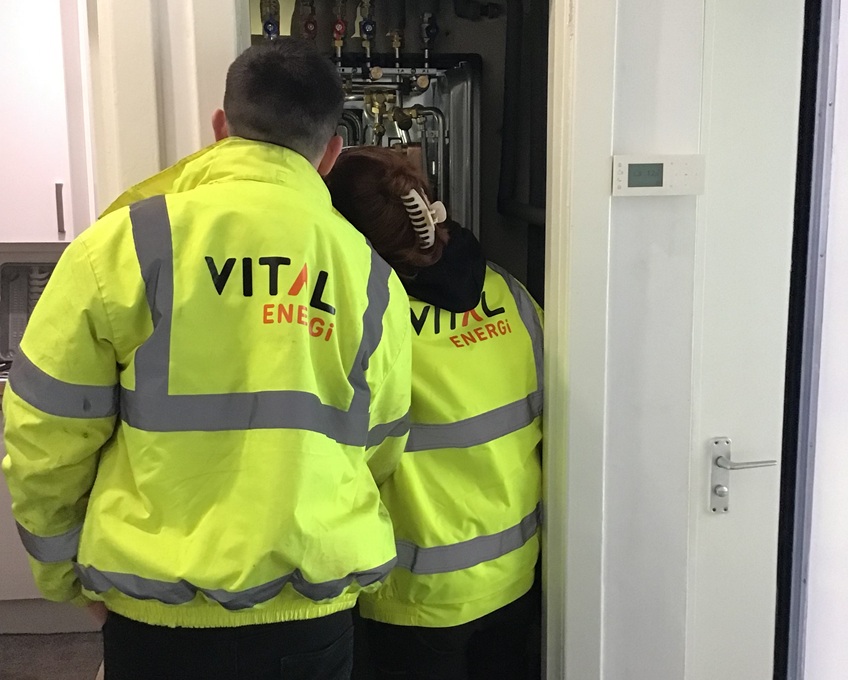
Residents now have modern controls, access to the Glass metering and billing platform, and ongoing support through newsletters, drop‑ins and a dedicated Vital Energi helpline. Energy‑saving advice, such as the impact of reducing thermostat settings by one degree, is helping residents stretch savings further.
The transformation has been felt across CHA’s operations. Voids are down 33% because previously hard‑to‑let properties are now more desirable. Reduced heating costs mean residents are under less financial pressure, and arrears have fallen.
Jack also notes a reduction in anti‑social behaviour, which he links to reduced stress and improved mental health.
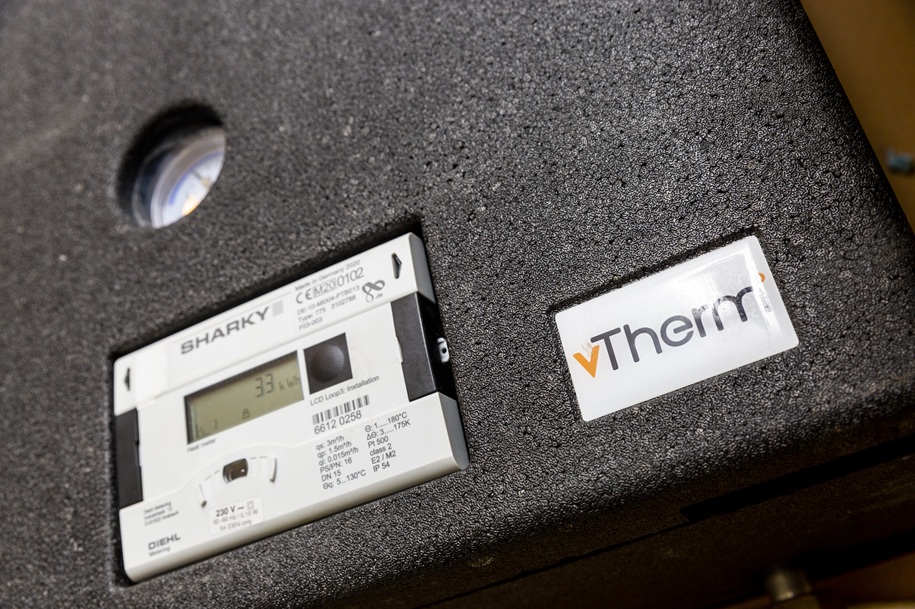
One of the Heat Interface Units in the flats
“The focus was always on improving the resident experience,” he said. “But it’s also strengthened the desirability of our stock and improved revenue stability.”
With clear evidence of success, CHA is now working with West Dunbartonshire Council and local developers to identify further opportunities to connect more homes, prioritising those with the most inefficient heating systems.
“It’s a proven way to combat fuel poverty, improve health outcomes and strengthen our stock,” Jack said. “The network was designed to expand, and there’s capacity for many more connections. We’re actively pursuing funding to make that happen.”

Share this article:

Subscribe to our newsletter to not miss articles like this one:
 SUBSCRIBE

