

More than £1.2bn of social value generated across UK social housing sector
 Reading time: 4 minutes
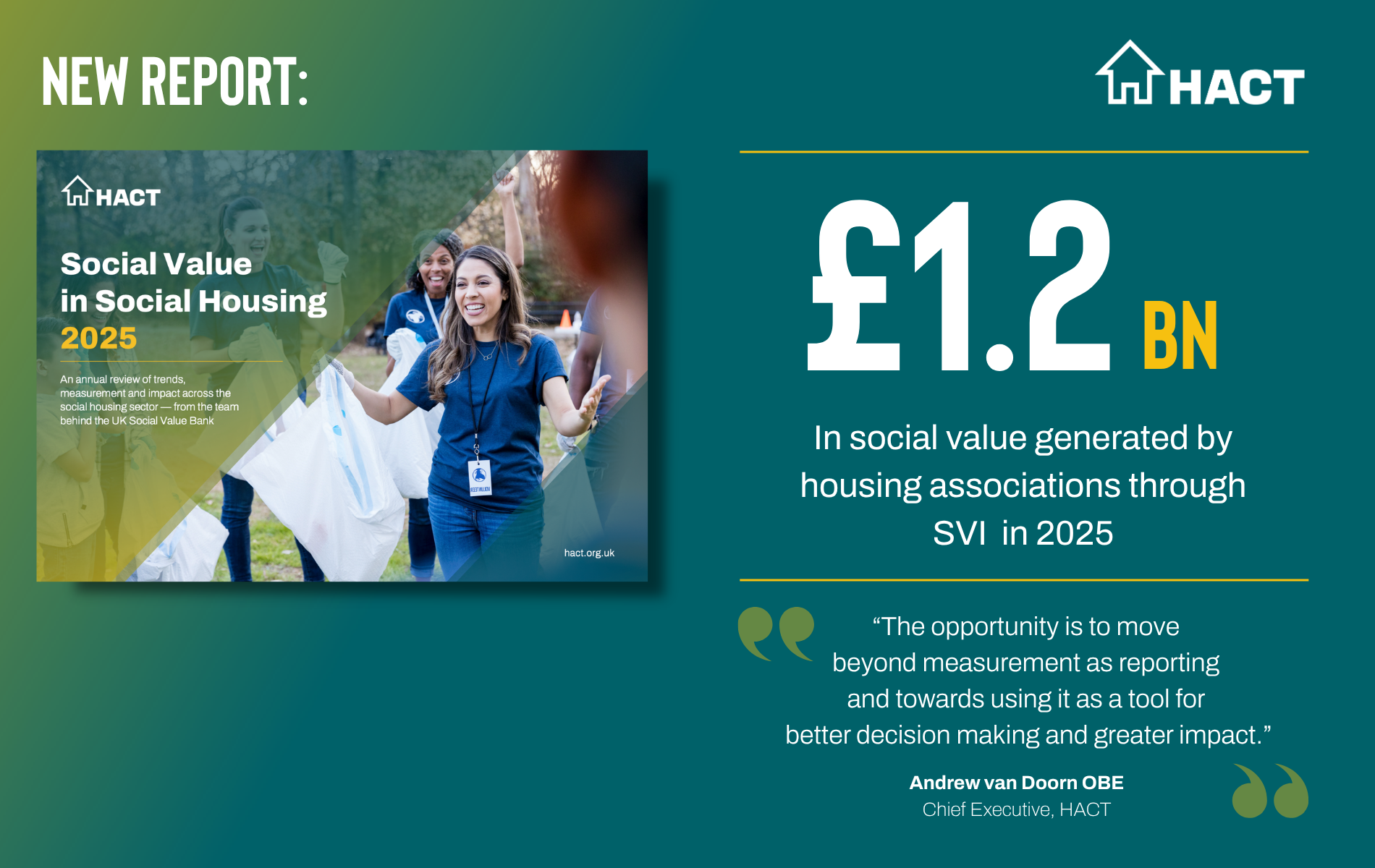
An annual report that reviews social value trends, measurement, and impact in UK social housing has revealed that more than £1.19 billion of social value was delivered by housing associations in 2025, supporting over 179,000 individual beneficiaries across the UK.
Published by HACT (Housing Associations Charitable Trust), the report brings together the most up-to-date evidence from housing associations using HACT’s Social Value Insight platform and the UK Social Value Bank (UKSVB), showing how organisations are measuring impact beyond bricks and mortar — from improved wellbeing and stronger communities to financial resilience and place-based regeneration.
Like many public organisations, housing associations are facing rising operational costs alongside growing demand for services, but the scale of impact reported here shows that they continue to deliver substantial social value despite these ongoing pressures.
Significant impact was created across a wide range of outcomes such as employment, wellbeing, and resilience, illustrating the critical role social home providers play in delivering not just housing, but wider social and economic benefits for residents and communities.
HACT chief executive, Andrew van Doorn OBE, said it reflects what is happening across the sector, and across society, from the “loneliness epidemic” amongst older people and young people, to increased cost of living across the board.
“Interestingly, the most commonly-used values and highest-contributing outcomes show a strong focus on community connection, financial stability, and mental wellbeing.
“Feeling of belonging to a neighbourhood” comes top in terms of delivering the most value. It’s clear that it’s really important for housing associations to ensure they demonstrate, evidence and communicate the role they play in shaping places and building strong communities.”
Another one of the most valued outcomes is financial comfort, which again affirms the role that housing associations are playing in supporting residents with financial support and financial advice.
Programmes that contributed to relief from depression and anxiety and increased confidence resulted in a social value of over £100 million combined, highlighting the growing importance of mental wellbeing support within housing services and the significant impact these interventions can have on residents’ quality of life.
Van Doorn believes the sector now has an opportunity to move from using social value measurement to retrospectively demonstrate impact, towards using it as a tool to drive more informed investment and service decisions.
“Looking at these outcome values and the social returns generated by these interventions at a larger scale shows us how safe, stable homes can help address these issues, which programmes are most effective, and where investment can have the greatest impact.”
The figures reported are calculated not only using monetary savings to the state, but also direct and indirect improvements to individual wellbeing, such as better mental health, greater financial stability, and stronger social connections.
For housing providers, this is particularly relevant. Many of the activities they deliver - whether tenancy sustainment, community investment or improvements to homes - are intended to improve people’s quality of life. A wellbeing-based approach provides a way of quantifying these changes, helping organisations move beyond just counting the numbers towards a clearer and comparable understanding of outcomes.
In 2026, the UK Social Value Bank, originally launched in 2014 by HACT with their partners Simetrica Jacobs, saw version 7 released, which contains uprated and expanded wellbeing valuations. This ensures that the monetary values reported are consistent with the latest evidence and adjusted for inflation, enabling organisations to more accurately quantify and communicate the difference they make.
Matthew Grenier, business development director at HACT, added: “Ultimately, confidence in social value reporting is not just about the numbers themselves, but about the clarity and credibility of the methodology behind them.
By adopting the latest version of the UK Social Value Bank, organisations can ensure their impact is measured accurately, consistently and in line with the latest evidence.”
The report also explores an increasingly important question for the sector — who pays for social value — highlighting the need for greater alignment between investment, delivery, and outcomes. As expectations grow from regulators, funders, and partners, there is a clear opportunity for housing providers to better articulate the value they create and ensure it is recognised, supported, and embedded in funding and decision-making frameworks.
Finally, the publication identifies several emerging trends for the year ahead, including increased focus on audit and assurance, environmental social value, mental wellbeing measurement, and the role of social value in regulatory performance and sustainability-linked finance.

Share this article:

Subscribe to our newsletter to not miss articles like this one:
 SUBSCRIBE