

Written by:

Swinney puts housing at heart of Programme for Government but critics demand delivery detail
 Reading time: 12 minutes
Written by:
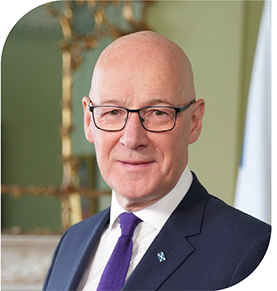
First minister John Swinney
First minister John Swinney has placed affordable housing and homelessness prevention at the centre of his government’s plans for the new five-year parliamentary session, unveiling a Programme for Government he says will deliver “lasting improvements to people’s lives”.
Presenting the programme to Parliament yesterday, Swinney confirmed a target of 110,000 affordable homes by 2032, of which at least 70% will be for social rent and 10% delivered in rural and island communities. The commitment is underpinned by planned investment of up to £4.9 billion, including a record £4.1bn of public sector funding, to support 36,000 affordable homes and the government’s wider all-tenure ambitions over this Parliament.
The Scottish Government said it had delivered 146,034 affordable homes since 2007, including 104,451 for social rent, with affordable housing supply proportionately 45% higher than in England and 69% higher than in Wales per 10,000 population.
A new national housing agency
Central to delivery will be a new national body, More Homes Scotland, to be phased in from April 2027. The agency is intended to bring funding, expertise and delivery tools together under one roof, removing barriers to housebuilding and unlocking private finance alongside public investment. It will also form a strategic partnership with the Scottish National Investment Bank to draw in further private commercial capital for housing across all tenures, including Build to Rent and social housing.
Other commitments include reform of the planning system to speed up developments, a new £10,000 First Homes Fund to help first-time buyers with mortgage deposits on homes up to £300,000, and engagement with stakeholders on proposals to give private tenants the right to buy the home they rent if the landlord puts it up for sale. The government also pledged to accelerate financial support for owners of buildings affected by dangerous cladding.
Ending homelessness
On homelessness, the first minister said the government’s approach would shift “from crisis management to prevention and rapid rehousing”. Measures include the rollout of a £50 million Homelessness Prevention Fund over 10 years, which has already provided £1m to the Scottish Federation of Housing Associations and Homeless Network Scotland to support tenancy sustainment in Glasgow, and support for up to an estimated 15,000 families affected by the UK Government’s freeze on Local Housing Allowance rates.
The government also confirmed its £2m “fund to leave” scheme, which supports women and children leaving an abusive partner, will be made permanent, and pledged support for local authorities to deliver 1,500 Housing First tenancies over five years. Other measures include continued growth of the Independent Living Fund, with investment of £88.6m, and £2m for Social Bite to expand its homelessness work.
Wider announcements
Beyond housing, the Programme for Government confirmed the most significant restructuring of the NHS since devolution, replacing Scotland’s 14 territorial health boards with two strategic boards.
Other measures include a national breakfast club for all primary schools from August 2027, an increase in the Scottish Child Payment to £40 a week for eligible babies under one during 2027-28, £205m in winter heating payments, and the extension of the £2 bus fare cap beyond the Highlands and Islands to the Strathclyde Partnership for Transport area from 7 September, ahead of a national rollout.
The government also confirmed plans to define misogyny as a distinct form of prejudice and abuse, and outlined nine bills for introduction in 2026-27, including a Buildings (Heating and Energy Performance) and Heat Networks (Scotland) Bill and a Council Tax (Scotland) Bill.
Swinney said the programme had “radical and widespread public service reform at its heart” and would build on what he described as the most generous cost-of-living package anywhere in the UK. He also restated his belief that Scotland would only reach its full potential as an independent nation.
Ambition welcomed, but delivery questioned
Housing and homelessness organisations broadly welcomed the government’s stated ambitions, while pressing for more detail on how targets will actually be met.
CIH Scotland national director Gillian McLees said the commitments were “an important opportunity” to respond to Scotland’s housing challenges, but cautioned that success would “depend on the detail behind the plan” rather than ambition alone.
In a fuller statement, CIH Scotland welcomed the government’s focus on prevention and its commitment to the Fund to Leave, and backed the reintroduction of a heat in buildings bill. However, the organisation noted that the first minister gave little detail on how the 110,000-home target would be delivered, pointing to mounting evidence that the government is falling behind both its own target and the 15,693-homes-a-year benchmark set out in research it published jointly with Shelter Scotland and the Scottish Federation of Housing Associations (SFHA).
SFHA chief executive Richard Meade argued the statement “needed to be a Programme for Housing,” saying the ambition to deliver 110,000 affordable homes and continued investment in homelessness prevention showed commitment, but that the government could go further. He linked housing supply directly to the government’s child poverty and public service reform goals, describing housing as “critical national infrastructure” that drives the economy and reduces demand on the NHS, homelessness services and social care.
Gordon Llewellyn-MacRae, interim director at Shelter Scotland, said while John Swinney has shown that he is “listening”, promises alone “won’t cut it any longer”.
“At Shelter Scotland we look forward to joining the First Minister to celebrate an end to the dangerous, damp, unsafe temporary accommodation too many children in Scotland are still condemned to live in across the country,” he added. “But today is not that day.”
“Last year he promised to build 8,000 affordable homes – it didn’t happen. Now, a year since the Scottish Government published its Housing Emergency Action Plan, we still don’t have a credible plan to deliver the social homes that can actually lift people out of homelessness. So he will understand why we will hold off the celebrations until the urgent change we need is a reality.
“Scotland’s communities cannot afford rhetoric without results. When government fails to deliver, it creates an environment where racist voices become louder, seeking to divide communities and strip housing rights away from people instead of addressing the real cause: a lack of social homes.
“For the families spending tonight stuck in temporary accommodation, another promise isn’t enough - they need change. John Swinney must now back up good intentions with action.”
Homeless Network Scotland’s head of policy and impact, Matt Hamill, welcomed the focus on joined-up public services and early intervention, but said ministers needed to show how they would end the use of unsafe temporary accommodation for children, given record numbers currently affected. He noted that Housing First is currently operating at only around 10% of required demand and needs to be “radically scaled up,” and cited Fraser of Allander Institute analysis suggesting the government is on track to miss its 2032 affordable housing target.
Hamill added: “The news that the Fund to Leave, to provide support for women and children to leave an abusive partner, is to be made permanent is a very positive step which is to be welcomed, as is the recognition of the particular challenges faced by refugees and asylum seekers, many of who face the very real risk of homelessness and destitution.
“Finally with Public Service reform sitting central to this Programme for Government, we are clear that this cannot simply mean reducing budgets or staff numbers. It must also mean transforming how our public services work to deliver the truly joined up approach which will not only improve outcomes for people but also deliver significant savings.
“Homelessness is not inevitable. We know what works and this Programme for Government must now provide the impetus for ministers to double down on delivery and further shift investment and public services toward preventing homelessness before it occurs.”
Crisis Scotland head of policy and communications Maeve McGoldrick welcomed the ambition to end homelessness and the £50m Prevention Fund, but said the announcement “lacked the much-needed detail” on how new homelessness prevention duties, due to commence in under two years, will be delivered, and urged the government to frontload the new prevention budget.
McGoldrick added: “We also welcome the recognition that creating new Housing First tenancies is essential to helping people off the streets. However, the ambition set out in Programme for Government is woefully below the level of need across Scotland.
“We believe ending homelessness for everyone in Scotland is achievable by 2040. But ambition alone will not get us there. What we need now is speed, strong leadership from the First Minister, and a relentless focus on results, and getting the numbers down, year after year.”
Kate Wallace, chief executive of Cyrenians, said the solutions within the Programme for Government look – at first glance – like they are the answer to Scotland’s housing emergency, but they also raise as many questions as provide answers.
Wallace welcomed much of the pledges, but warned that “we must look at the context in which these promises are being made”.
She said: “Annual targets for building housing are being missed – and the 4.1 billion pledged for affordable housing falls significantly short of what Shelter Scotland have predicted will need to be spent to reach the social housing target.
“The £50m pledge for prevention – Cyrenians own ask – is a good start. But at present lacks detail about how – and where – that money will be targeted to make the biggest impact and if that money will be available for grassroots organisations to continue their work long term.
“It is promising to see that the Social Bite village – that Cyrenians has a hand in delivering in Edinburgh – will be replicated across the country. But is £2m for supported accommodation be enough for the historically high number of rough sleepers in Scotland – who need this kind of supported accommodation on a long-term basis?”
Wallace also questioned the use of accessible services – newly required duty to ‘Ask and Act’ if they think someone is homeless – if social housing is “sparse”, and preventative services are a “postcode lottery”.
She added: “This problem cannot be solved overnight. But neither can it be solved with good intentions. Today’s announcement was a good start, but the housing emergency needs more funding, and longer term, strategic thinking. Otherwise, we will be in the same situation, for many years to come.”
Janet Haugh, CEO of Right There, said: “We are particularly pleased to see repeated reference to prevention and tackling the underlying causes of some of the issues facing people across Scotland today, including homelessness, offending and child poverty.
“At Right There, we’ve recently had the opportunity to discuss our holistic model of support with Scottish Government officials visiting our services. They were able to hear directly from some of the people we work alongside about the impact tailored, preventative support has had on them and their families.
“Those conversations reinforced our belief that preventing people from becoming homeless or separated from their loved ones is more effective, less costly and far less disruptive than responding after someone has reached crisis point.
“It’s encouraging to see the scale of ambition being set out by the Scottish Government but, as John Swinney acknowledged himself, the challenge now is delivery. We look forward to working alongside government, local authorities and partners across the sector to help turn these commitments into lasting change.”
Homes for Scotland chief executive Jane Wood said it was encouraging to see housing remain central to the first minister’s thinking given Scotland is now in the third year of a housing emergency, with both housing starts and completions continuing to decline. She backed the government’s commitment to planning and regulatory reform and its “regulate last, regulate simply and regulate flexibly” principle, calling the shift toward a “yes, if” rather than “no, because” culture a significant and urgently needed change, while stressing there was “no time to lose” in translating commitments into action.
Wood’s response follows comments published on LinkedIn earlier this week highlighting growing frustration among businesses at the increasingly difficult environment in which they are trying to deliver new homes, with one describing rural SME home builders as “fighting for their lives”.
She added: “The first minister has set a welcome direction, but there is no time to lose in rewiring the system. We need to see barriers removed, investment maximised and these commitments translated quickly into practical action.
“The home building sector stands ready to support this work. We must now move forward together with renewed purpose and urgency if we are to increase housing delivery and bring Scotland’s housing emergency to an end.”
Propertymark head of policy and campaigns Timothy Douglas said he was surprised housing was barely mentioned in the first minister’s speech given the ongoing housing emergency, and warned that local government restructuring risked pooling resources rather than expanding them.
He said the programme lacked any mention of reducing taxes for renters, buyers and sellers, and called for a better-resourced First Tier Tribunal and a workable, evidence-based approach to any tenant right-to-buy proposal.
On social care and local government reform, LGIU chief executive Jonathan Carr-West warned that running concurrent three-month consultations on local government restructuring and social care reform risked sidelining local government’s voice, and noted the absence of any agenda to address local government finances. He pointed to the failure of the National Care Service reform effort as a cautionary example of what happens when engagement with local government is limited.

Share this article:

Subscribe to our newsletter to not miss articles like this one:
 SUBSCRIBE