
Bryan Leask and Dr Olivia Swann join Scottish Fuel Advisory Panel
 Reading time: 4 minutes
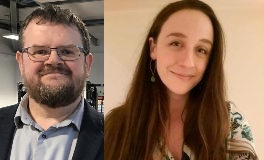
Bryan Leask and Dr Olivia Swann
Housing secretary Màiri McAllan MSP has unveiled two new panel members of Scotland’s fuel poverty watchdog.
The Scottish Fuel Advisory Panel scrutinises the Scottish Government’s progress towards meeting Scotland’s fuel poverty targets, including the goal that no more than five per cent of households should be living in fuel poverty by 2040.
The independent statutory panel also examines how effectively policies and programmes are addressing the four key drivers of fuel poverty: poor energy efficiency, low household income, high fuel costs and how energy is used in the home.
New appointees Bryan Leask and Dr Olivia Swann bring front-line experience of two of the most acute aspects of fuel poverty; the disproportionate impact on rural communities, and its consequences on health, particularly for children.
Bryan Leask, chief executive of Hjaltland Housing Association in Shetland, has extensive experience of rural and island fuel poverty and currently chairs the Scottish Rural and Islands Fuel Poverty Action Group.
Dr Olivia Swann brings extensive professional expertise into the harmful health consequences of fuel poverty – as a consultant paediatrician, she sees first-hand how cold, damp homes contribute to children becoming unwell and requiring hospital care.
Matthew Cole, chair of the Scottish Fuel Poverty Advisory Panel, said: “It’s great to welcome our new panel members who offer unique insights into two key areas of fuel poverty concern: rural fuel poverty and the impact of fuel poverty on health. Bryan and Olivia have both witnessed the impact of fuel poverty particularly in recent years when fuel bills have become unmanageable for many households.
“Bryan has seen, time after time, the realities faced by families living in cold homes – the sheer misery of coming home to a freezing property and not being able to run a hot bath or cook a warm meal and Olivia brings a practical, child‑centred perspective, with a strong focus on prevention and ensuring children’s health is fully considered in actions to tackle fuel poverty.
“We are very lucky to have them both joining our other members on the panel.”
Bryan Leask is a member of the Scottish Government’s Zero Energy Social Housing Taskforce, its New Build Heat Standard Working Group, and its Energy Standard Review Working Group.
A qualified domestic energy assessor, he said: “Fuel poverty affects health, dignity, and life chances, and its impacts are felt most acutely in remote, rural, and island communities where higher wind speeds and a more challenging environment, along with poorly insulated housing, and limited alternatives to expensive fuels, lead to higher energy costs and combine to deepen inequality.
“With the right mix of targeted investment, improved housing standards, and appropriate energy solutions, we have a real opportunity to deliver warmer homes, fairer energy costs, and more resilient communities across Scotland.”
Dr Olivia Swann leads the Homes, Heat and Healthy Kids programme, which brings together health, housing and energy data to show where improvements to homes can make the biggest difference for families.
She added: “As a paediatrician, I see first-hand how living in cold or damp homes affects children’s health. Fuel poverty increases respiratory illness, worsens conditions like asthma, and places a burden on families that can last far beyond childhood. Tackling fuel poverty through effective, preventative policy is one of the most powerful ways we can improve children’s health, reduce long-term inequalities, and give every child a healthier start in life.”
The Panel recently confirmed the reappointment of Mr Matthew Cole as chair until 31 December 2029, alongside the reappointment of fellow panel members Dr Fraser Stewart, Dr Kirsten Jenkins and Mr Alister Steele.

Share this article:

Subscribe to our newsletter to not miss articles like this one:
 SUBSCRIBE