


Written by:

Homeless deaths in Scotland rise 38% in a year
 Reading time: 5 minutes
Written by:
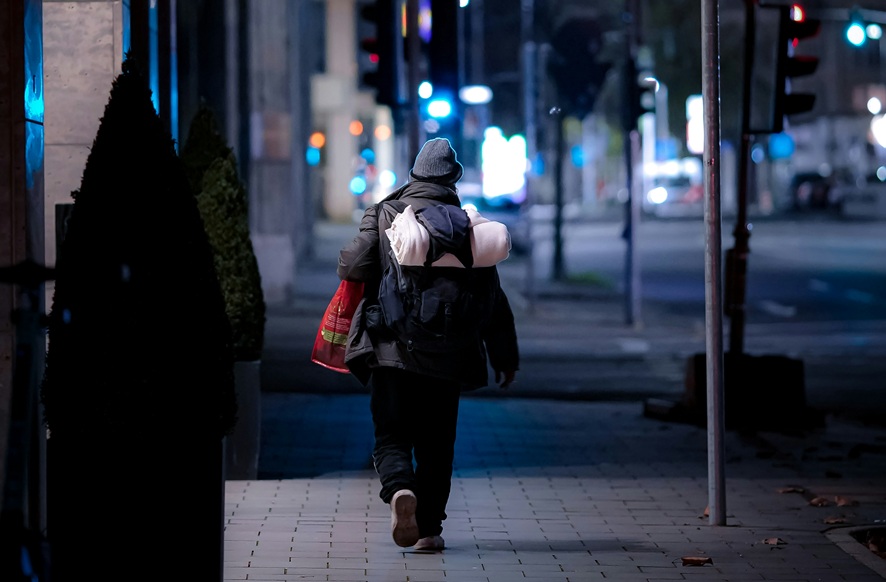
The number of people who died while homeless in Scotland rose by 38% last year, with 232 deaths recorded in 2025 compared with 168 in 2024, according to new research.
The figures come from the Dying Homeless Project, an independent investigation run by the Museum of Homelessness. It records deaths among people sleeping rough and those in temporary, supported or other insecure accommodation, drawing on Freedom of Information requests, coroners’ reports, homelessness organisations, families and media reports.
The rise reverses the positive trend highlighted in the project’s report last year. Fourteen Scottish council areas reported an increase.
Edinburgh and Glasgow
Edinburgh saw the sharpest change. Deaths there more than doubled from 23 to 56, accounting for roughly one in four of the Scottish total. Across the UK, the capital has one of the highest rates of homeless deaths per head of population, alongside Bristol, Brighton and Hove, Camden and Stirling.
In Glasgow, 36 people died, up 16% from 31 the year before but still well below the peak recorded in 2023.
Only four areas saw significant falls: North Lanarkshire, Dumfries and Galloway, Renfrewshire and Highland. The project noted that the drop in North Lanarkshire was matched by a similar-sized rise in neighbouring South Lanarkshire, which may reflect people experiencing homelessness moving between the two areas.
Deaths among people sleeping rough or with no fixed abode in Scotland rose from four to 14. Deaths among people in rough sleepers’ or supported accommodation rose by 36%. Fewer deaths were reported in hotels, though the project cautioned that some councils may have recorded these as “emergency” or “temporary” accommodation instead, so it is unclear whether practice has changed.
The researchers said they could say little about the individuals who died because of the limited information councils supplied. Local organisations and journalists, however, describe the toxic drug supply as a major factor.
Housing emergency and drugs crisis
Scotland declared a national housing emergency in May 2024. The report notes that the number of households in temporary accommodation was 10% higher in March 2026 than a year earlier, while the number of people who had slept rough the night before applying as homeless rose by 20%. The project says this growth in homelessness is likely a key driver of the increase in deaths.
Scotland also continues to have the highest rate of drug-related deaths in Europe. Those deaths rose by 11% in 2025, ending a downward trend that began in 2020. Deaths involving nitazenes, a type of synthetic opioid, and/or fentanyl accounted for 22% of the total.
These substances are far stronger than heroin and can be mixed with other drugs such as tranquillisers, making fatal overdoses more likely. In June 2025, NHS Lothian’s Drug Harm Early Warning System flagged a rise in drug harms in Edinburgh city centre, with a particular impact on homeless people.
Scotland’s increase was well above the UK-wide rise. The project documented 1,720 deaths across the four nations in 2025, up 6.8% on the previous year, and more than 10,000 since records began in 2017.
At least 214 people died while sleeping rough or with no fixed abode, a further increase. More than 30% of all recorded deaths happened on the streets or in accommodation for people recently sleeping rough, even though rough sleepers make up under 3% of the homeless population.
The project also identified 51 children who died while living in temporary accommodation, its highest figure. Only seven had been identified through council homelessness reporting routes, and 63% were under one year old.
National Records of Scotland (NRS) publishes its own annual estimate, which uses death registration records and statistical modelling for people aged 15 to 74. It put the 2024 figure at 231, compared with 242 in 2023. NRS figures for 2025 are expected in the coming months.
The project said the two datasets are not directly comparable because their methods and reporting cycles differ, but acknowledged it is probably undercounting. NRS relies heavily on address information that can be cross-referenced with death certificates, so it captures deaths in temporary, emergency or supported accommodation well. For 2024, NRS identified 40 more deaths than the project did, suggesting gaps in the data councils shared. The project said it hopes to build stronger links with NRS after both organisations presented at a meeting hosted by MHCLG in September.
Calls for action
The project wants every local authority to be required to record and report homeless deaths, including those of children, and a named person in each authority to make sure lessons are published and acted on. It also calls for more investment in safe accommodation, support for people leaving prison, mental health care, suicide prevention and drug harm reduction, arguing that moving people indoors does not make them safe if the accommodation is poor or support is lacking.
Museum of Homelessness director Jess Turtle said the findings revealed “a nationwide scandal”. She warned that people are placed in unsafe pay-per-night accommodation without support and urged the creation of high-quality settings with consistent wraparound support rather than hastily arranged services.
A Scottish Government spokesman said: “Every death of a person experiencing homelessness highlights its unacceptable cost.
“That is why we are taking decisive action to shift our approach from crisis management to prevention and rapid rehousing, backed by our £50m Homelessness Prevention Fund, the delivery of 1,500 Housing First tenancies and our £2m support for Social Bite’s efforts to address homelessness.
“We remain committed to delivering 110,000 affordable homes by 2032, with at least 70% for social rent and 10% in rural and island communities. To support this ambition, we are investing £926m this year through our Affordable Housing Supply Programme as part of a wider four-year investment of up to £4.9 billion.
“We are also calling on the UK Government to scrap the continued freeze on Local Housing Rates, which is one of the biggest drivers of homelessness. We recognise the importance of taking action where private rents are rising steeply, which is why we’ve introduced long-term rent controls through the Housing Act, with the first local authority assessment reports due by May 2027.”

Share this article:

Subscribe to our newsletter to not miss articles like this one:
 SUBSCRIBE