

New delivery protocol launched to end fragmented support for people with multiple disadvantage
 Reading time: 8 minutes
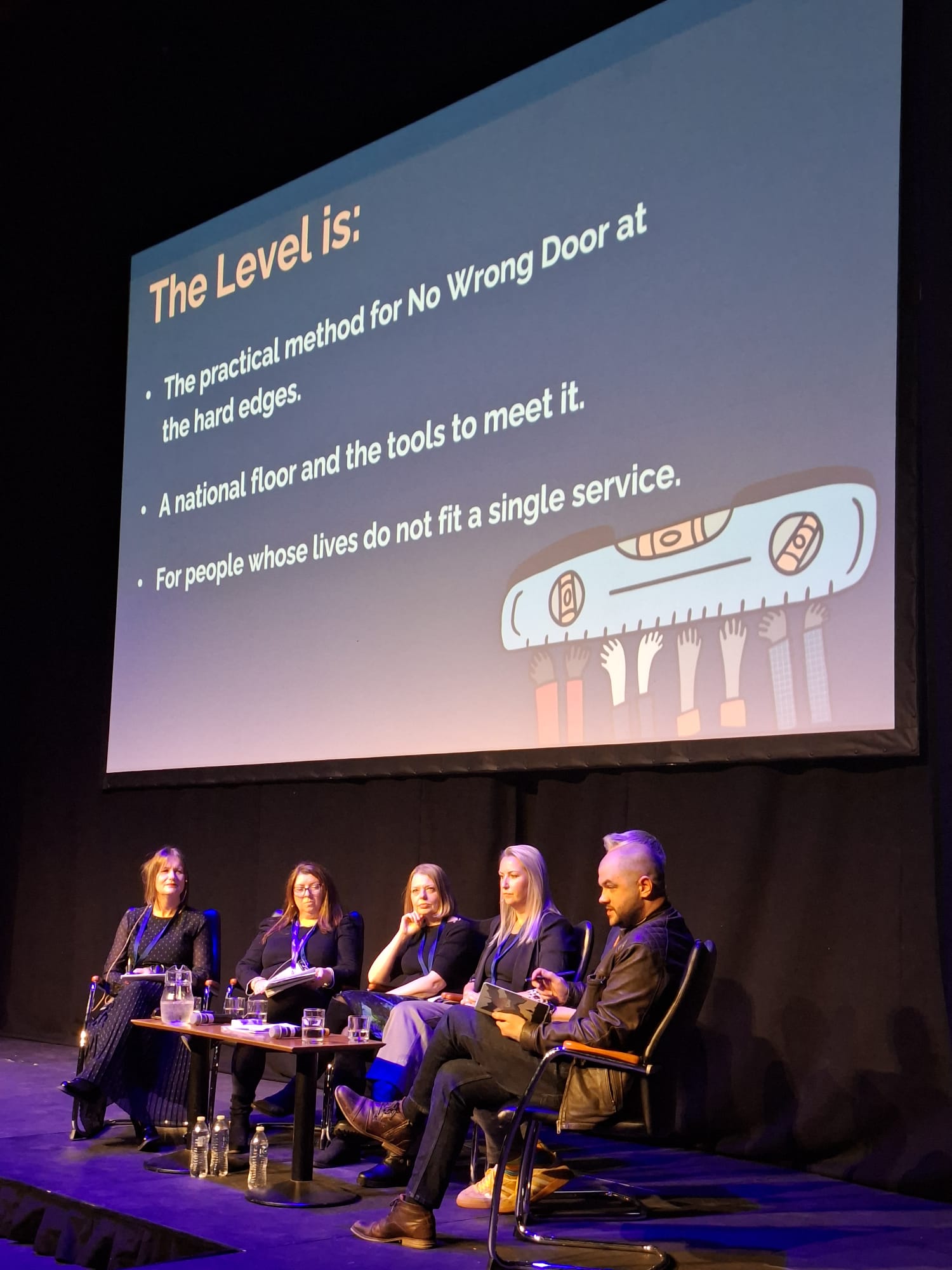
The launch saw a panel discussion with participants from academia, government, the third sector and public services
A new national approach aimed at ending fragmented support for people facing severe and multiple disadvantage in Scotland has been welcomed by a range of voices across government, public services and the third sector.
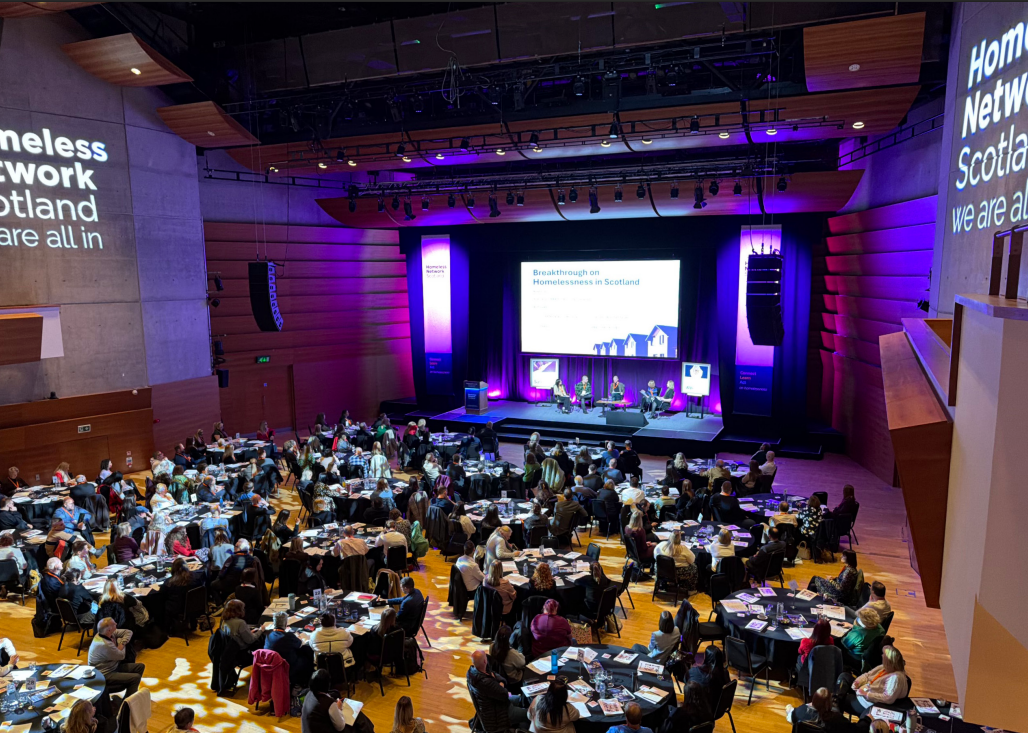
The protocol titled ‘The Level’ was formally launched by Homeless Network Scotland yesterday as part of the national membership body’s annual conference held in Perth this week.
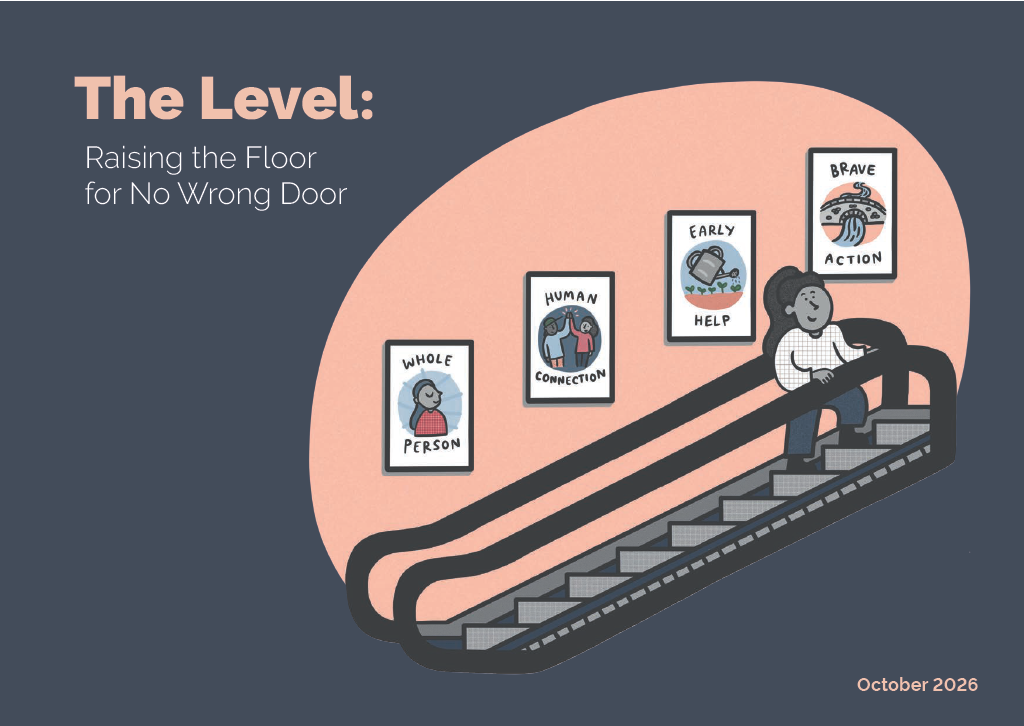
Developed from evidence, lived experience and frontline learning, The Level seeks to establish a national floor or baseline for public services supporting people facing severe and multiple disadvantage- a term understood by experts to include overlapping challenges including homelessness, substance dependency and offending.
The Level takes long-standing thinking on the ‘No Wrong Door’ approach- the idea that joined-up support should be available to someone wherever they first turn for help - and turn this theory into consistent practice on the ground.
This will ensure that people experiencing severe and multiple disadvantage (SMD) receive coordinated, wrap-around support rather than being passed between public services which remain overly organised around their own individual issues.
The summit in Perth focused on closing the gap between Scotland’s ambitions on prevention and integrated public services and people’s experiences, with The Level designed to provide shared practical tools for practitioners, commissioners and policymakers across different public services.
Now leading voices from across Scotland have welcomed the approach and the new protocol.
Scotland’s cabinet secretary for social justice and housing Shirley-Anne Somerville said: “People facing severe and multiple disadvantage should not have to tell their story at every door. A no wrong door approach can only succeed if support is available where people need it, when they need it, and to a consistent standard wherever they live.
“The Scottish Government is committed to preventing crisis before it occurs, improving outcomes through earlier intervention, and reforming public services so they work more effectively around the needs of individuals. That means taking a whole-person approach and ensuring services work together to provide joined-up support.
“I welcome this shared effort through The Level, which reflects our common ambitions and provides a practical framework to help strengthen preventative, person-centred and coordinated approaches that support people to get the help they need.”
Helen Murdoch, assistant territorial director for strategic operations & development Scotland at The Salvation Army, said: “The Level is an example of policy into action - a strategic approach that acknowledges the complexity of public services while remaining focused on improving people’s day-to-day lives.
“It is common for complex issues to be addressed separately, from homelessness and contact with criminal justice, to substance use and poor mental health. In truth, all those challenges can be experienced simultaneously by one vulnerable person.
“It follows that our response must also be joined up to support better outcomes for people in Scotland facing multiple severe disadvantage. We are pleased to support The Level and to work with partners to make its implementation a reality.”
A spokesperson from the Scottish Prison Service said: “Supporting people as they move from custody to community is key to successful rehabilitation, reducing reoffending, and building better futures for them and their families.
“This is particularly important for those who have experienced trauma or disadvantage. We therefore welcome this protocol and the opportunity it provides to strengthen our commitment to working in partnership to understand individual needs, reduce barriers and improve outcomes.”
A Scottish Refugee Council spokesperson added: “Scottish Refugee Council has chosen to endorse The Level as we can see elements of the protocol that could make a real difference to the lives of our clients: namely trauma-informed services and more joined-up thinking. Having a thoughtful system that works for the people using it, rather than them having to navigate multiple confusing and inaccessible processes, can only be a positive for people rebuilding their lives in Scotland.”
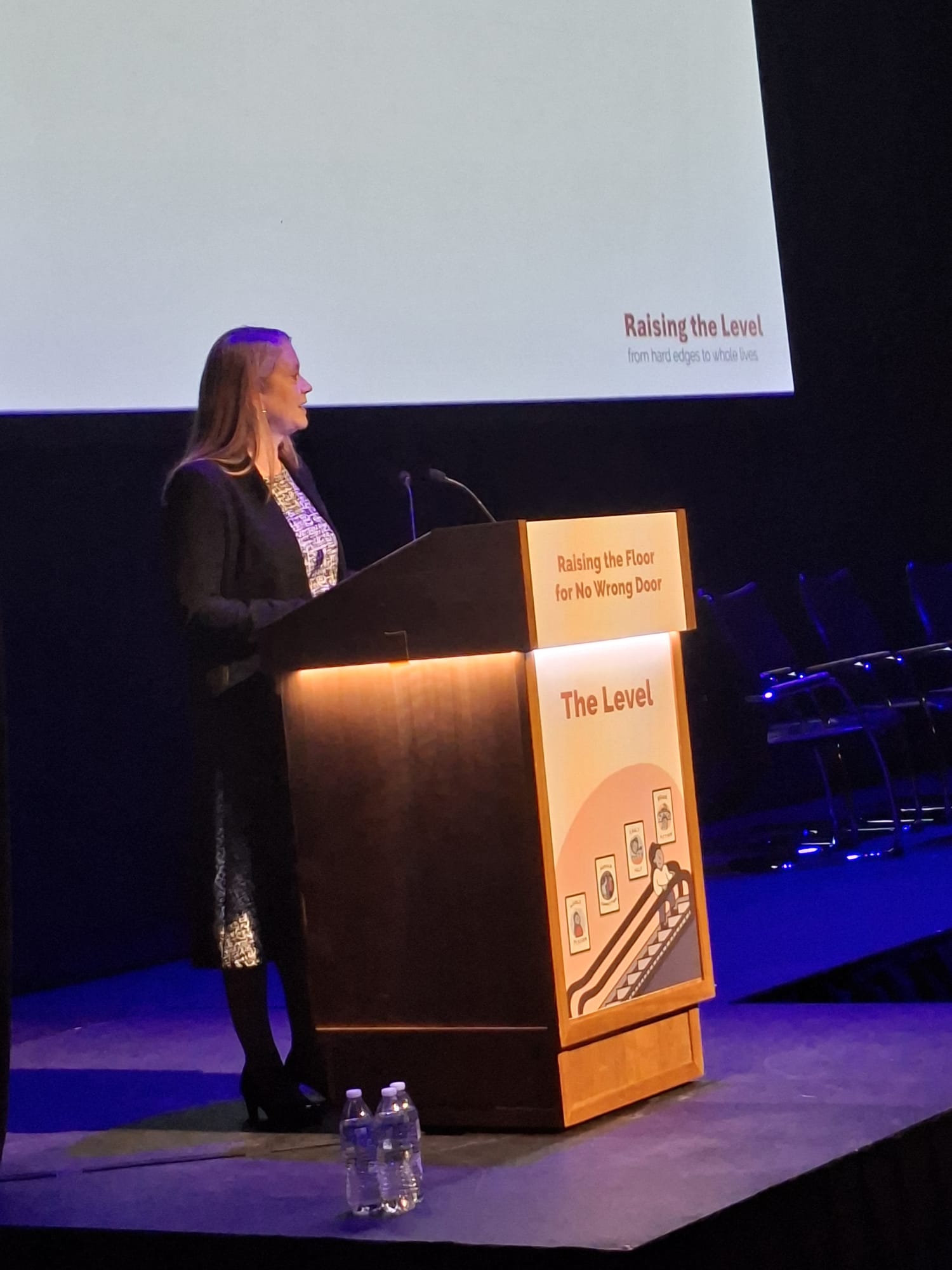
The cabinet secretary speaking before the launch
Aoife Deery, housing spokesperson for Citizens Advice Scotland, described The Level as a “step change” in how services respond to people facing multiple, interconnected challenges, adding that: “We know the challenges people experience alongside homelessness rarely exist in isolation. People are facing multiple interconnected issues, while navigating services that can feel disconnected.
“By doing things differently and working together, we can help end the housing emergency and ensure everyone in Scotland has a safe, secure and sustainable home.”
Anna Fowlie, chief executive of the Scottish Council for Voluntary Organisations, said: “All the evidence tells us that the best outcomes for people and communities depend on every part of the system to work together respectfully to maximise expertise and resources, to stop duplication and to focus on people not institutions. We need to take a long-term approach with patience and evidence-based investment.
“The Level, alongside other aligned commitments such as The Promise, gives us a route-map to addressing some of our most intractable issues.”
Public Health Scotland welcomed The Level, saying it gave its backing to the principles behind the protocol and describing severe and multiple disadvantage as a significant public health issue rooted in poverty, trauma, inequality and social exclusion.
It added: “We also recognise that meaningful progress requires national and local partners to work together to strengthen prevention, improve coordination between services, address the wider determinants of health and tackle the structural inequalities that drive severe and multiple disadvantage.”
Peter Kelly, chief executive of the Poverty Alliance, said the “injustice of poverty takes away freedom and security from people in many different ways” and that people experiencing poverty too often had to navigate complex and siloed services which failed to provide all the support they needed.
Mr Kelly added: “By systematically adopting The Level, it will be easier for people to get support when they need it, laying a foundation that allows them to build a better life for themselves and their households.”
Kirsten Horsburgh, chief executive of Scottish Drugs Forum, welcomed The Level’s focus on whole-person and whole-system support.
She said: “We need joined-up approaches that recognise the wider circumstances that shape people’s health and quality of life.
“We particularly welcome the collaborative approach taken by Homeless Network Scotland to developing this protocol, bringing together insight, practice and evidence from across sectors. Meaningful change requires us to work together, challenge the barriers within our systems, and ensure people get the support they need.”
Karyn McCluskey, chief executive of Community Justice Scotland, said: “For too long, we’ve asked people facing the greatest disadvantage and hardship, to stitch together a system that was built to support them. That system failure doesn’t come from nowhere, it’s designed in - structure by structure, and we have all seen the damage done when it fails the people it exists to serve.
“The Level changes the starting point; build services around whole lives, not organisations, so nobody falls through the gaps, and the system finally does the job it was created to do.”
GPs at the Deep End, an organisation representing GPs working in communities affected by poverty and inequality, said the launch came at a time when support for people experiencing severe and multiple disadvantage remained “hugely variable” and that a resource like The Level is “needed now, more than ever”.
The organisation added: “We want to be able to work in a system where continuity is more valued, where complexity is more manageable, where prevention is the norm. For too long there has been a gap between what is written in policy, and what happens on the ground. This will help to bridge that gap.”
Turning Point Scotland, head of homelessness and prevention, Nicky Miller said: “We are excited to see our approach and learning translated into some of the tools and lessons included in The Level and a clear vision of a system that works together with people experiencing complex challenges in their lives. We are not going to end homelessness by focussing on service delivery alone, it’s time to change the system.”
Sara Redmond, chief officer at the ALLIANCE, said: “Through our work, we see first-hand the complex challenges experienced by people facing severe and multiple disadvantage and the barriers they can encounter when seeking support.
“The Level offers a valuable framework for public services to work together more effectively, placing people’s rights, experiences and aspirations at the centre of decision-making.”
“By promoting collaborative, person-centred approaches and recognising the vital role of communities in supporting people to live well, it has the potential to improve outcomes, reduce inequalities and ensure people receive the coordinated support they need, when they need it.”

Share this article:

Subscribe to our newsletter to not miss articles like this one:
 SUBSCRIBE