


Red lines needed to ensure ‘inspiring’ housing AI innovations continue
 Reading time: 4 minutes

Housing data leaders have been urged to use red lines to protect against potential “AI fever” while ensuring “inspiring” innovative work can continue.
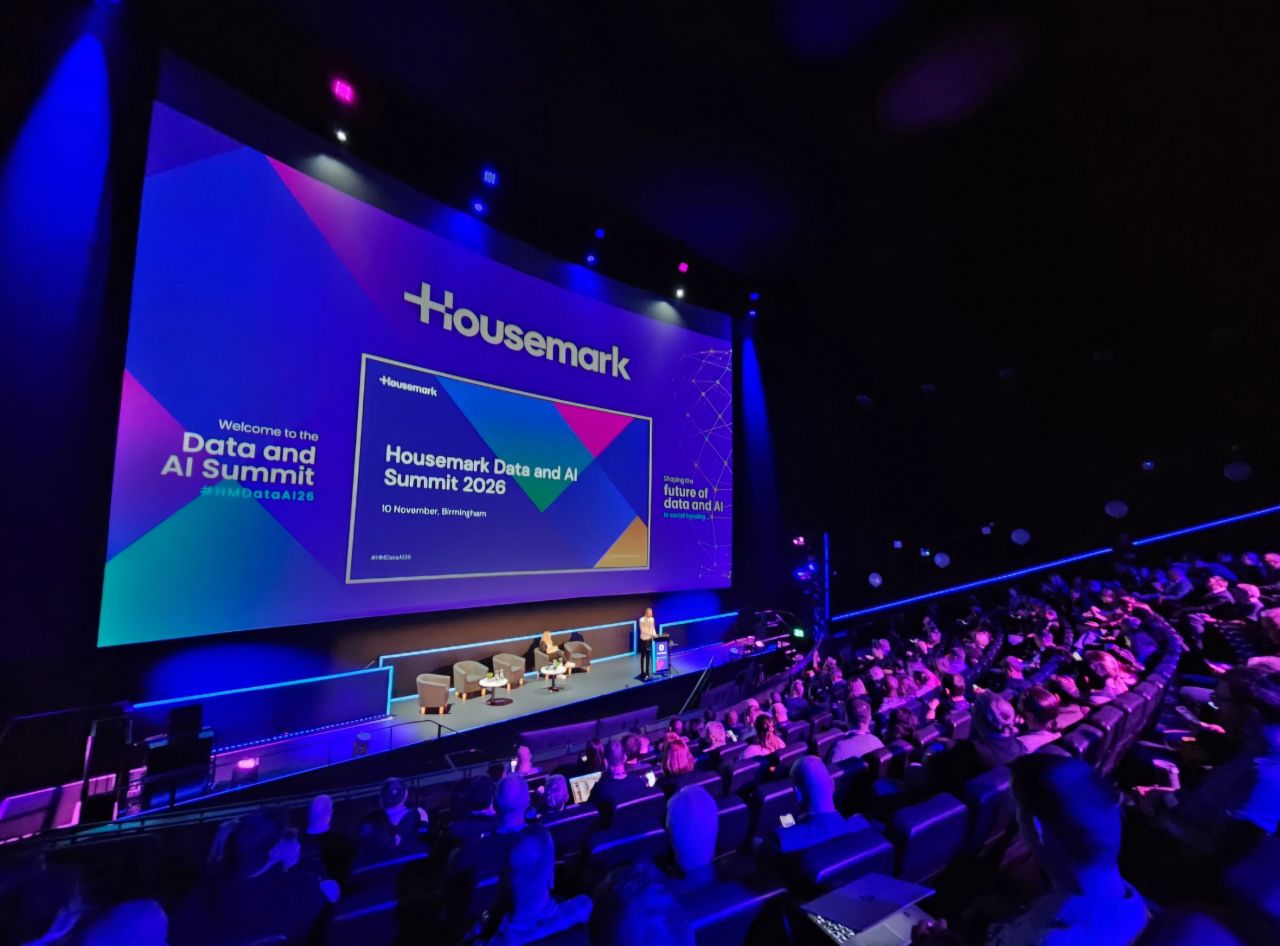
Delegates at Housemark’s annual Data and AI Summit in Birmingham also heard from landlords who have built AI models that have helped cut tenant complaints by a third and are also successfully categorising damp and mould cases. But speakers agreed that humans should always remain in control.
Speaking in a session on AI governance, Karen Doran, director of regulatory engagement at the Regulator of Social Housing, said it was “inspiring” to learn of sector innovations and that the regulator is interested in how AI might help landlords deliver better against the regulatory standards. She asked if AI is “…driving ways in which you can get services to those who need them most?”
Doran said that her organisation has seen many “good examples from landlords on data governance and how this considers AI”. But she added: “I can see we can get a bit of AI fever [as a sector]. Housing providers need to have red lines so that we know when we have gone far enough.”
Earlier in the day, delegates had heard from Onward Homes about an AI agent it has created to help predict where customers may be about to make a complaint. In tests, it has helped cut complaints by 31%.
David Parkforth, a data engineer at Onward, said he had created and tested the agent over six months with the aim of “trying to predict a complaint before it happens and break that cycle”. In a pilot project the agent was able to review “warning signs” from five years of data on repairs, recent customer contact and tenancy records to produce a ranked list of tenants for expert humans to review and then intervene or contact the customer as needed.
Onward’s analysis of the live pilot using a contact group and a separate control group found the agent correctly predicted a complaint with a success rate of up to 85% and up to 10 days beforehand.
Onward is also trialling an AI agent that combines AI image assessment with tenancy records to ensure damp and mould cases are correctly classified. The aim is to improve customer outcomes and cut the 900-plus aborted damp and mould visits in 2025 by Onward operatives.
Throughout the day, sessions were underpinned by analysis from the recent ‘Beyond the AI Hype’ survey carried out by Housemark, which was based on detailed responses from 66 housing providers.
John Wickenden, research manager at Housemark, said that while the survey showed AI access is now quite widespread in the housing sector at 59%, “regular use, formal support and impact measurement are not”. He shared tips on how delegates can turn “AI experimentation into impact”.
Dan Sodergren, technology entrepreneur, AI author and BBC contributor, echoed comments from the regulator when he called for delegates to exercise caution and use their “emotional intelligence” when approaching when he termed “the fifth industrial revolution” of AI.
Sodergren said that Housemark’s AI study had found “55-67% of people admit using shadow AI” - additional but unauthorised AI platforms for work purposes. He added that people should “have the courage to experiment [with AI] and do so safely…shadow AI use can be incredibly harmful and expose customer data without the right approach and safeguards”.
Housemark also used the event to highlight the importance of ‘data maturity’ and the strong influence a good approach to data management has on consumer regulation gradings. Jonathan Cox, chief data officer at Housemark, said: “Over 9 in 10 C3 or C4-graded landlords have data weaknesses identified by the regulator. Data maturity is a key issue here – our analysis has found it is the biggest predictor of consumer gradings by the regulator.”
Cox set out the three data maturity profiles Housemark has developed to help landlords understand their position. A data maturity survey that ran during the event found that an “encouraging” 45% of respondents scored more than three out of five, placing them towards the higher end of Housemark’s three profiles.
Delegates also heard from explorer Oli France and the lessons on building strong projects that he thinks business leaders can take from his expeditions to some of the world’s highest and most inhospitable places.

Share this article:

Subscribe to our newsletter to not miss articles like this one:
 SUBSCRIBE